
Antibiotic susceptibility patterns (antibiograms)
The data provided below is for all Awanui Labs sites.
Antibiotic susceptibility patterns (longitudinal data) 2025
Escherichia coli – community urine isolates
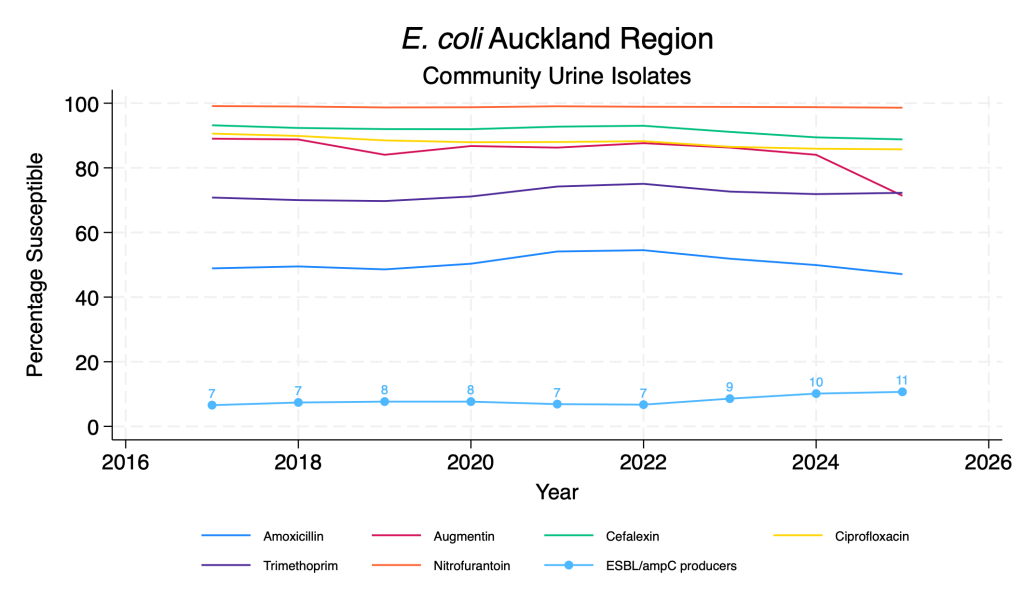
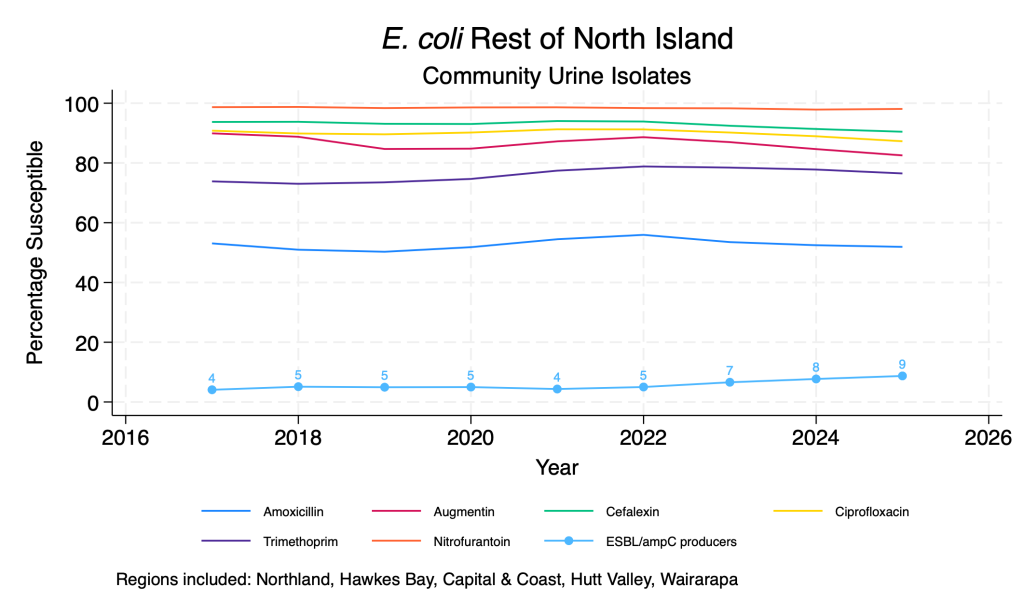
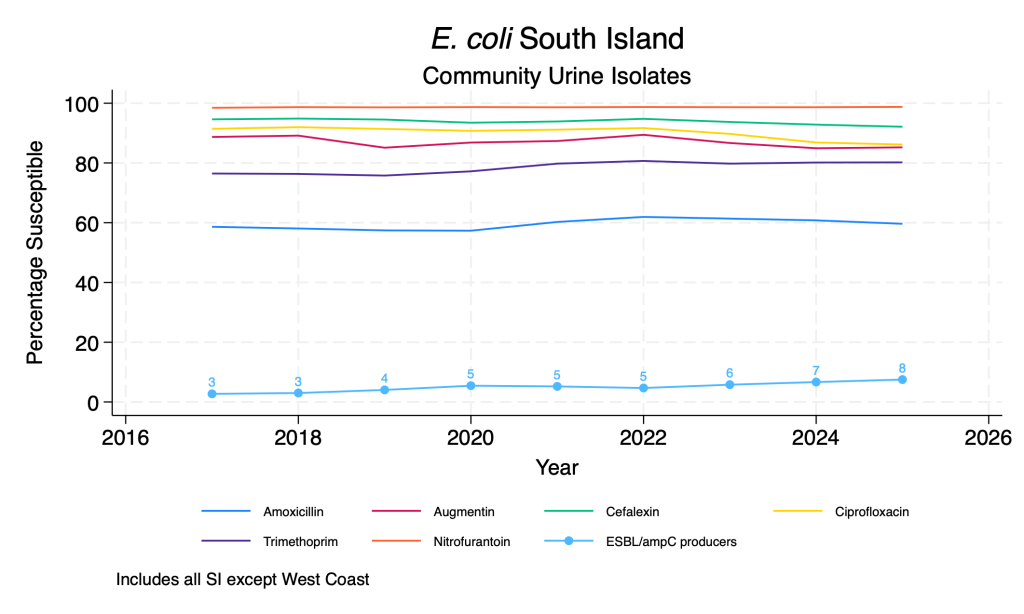
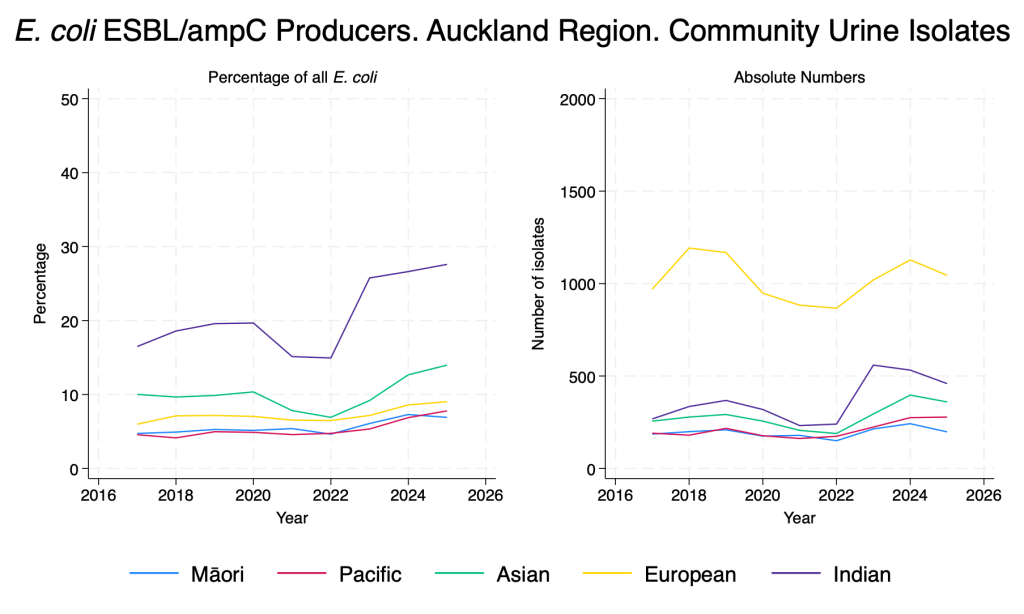
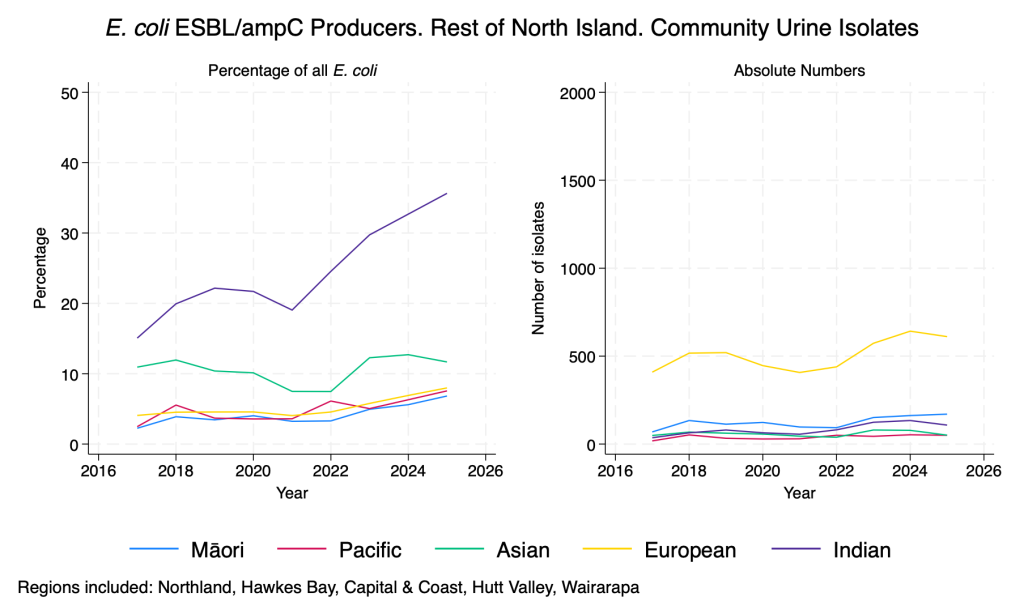
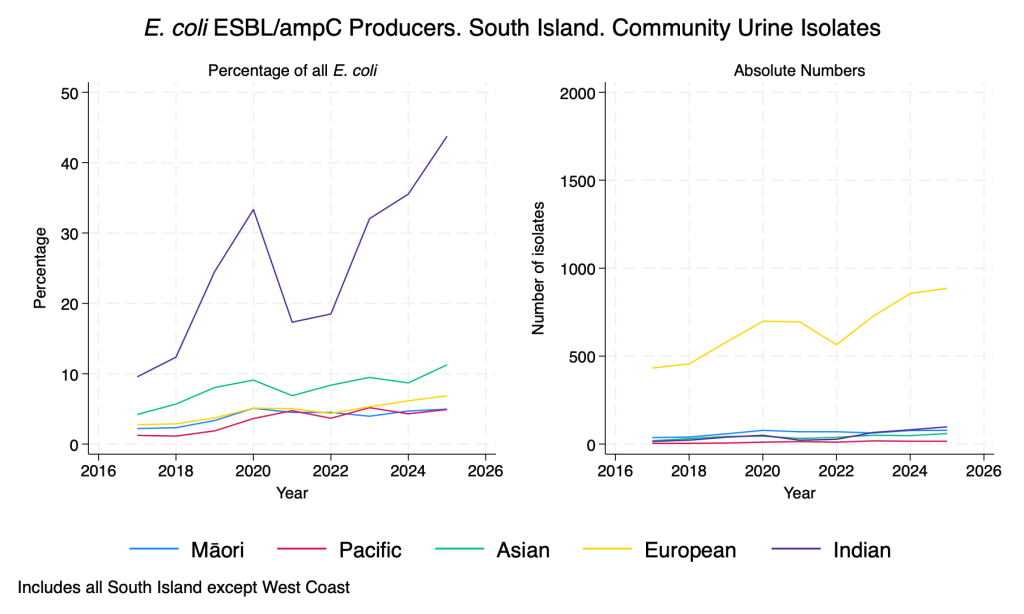
Data derived from community urine samples. E. coli is the commonest urinary isolate by a huge margin. Duplicate isolates from the same person in the same year with the same resistance pattern are removed. ESBL/ampC production is inferred from resistance to any third-generation cephalosporin. Percentage of isolates with ESBL/ampC production is also presented by prioritised ethnicity, due to the known association between gram negative resistance and ethnicity in the NZ context.
Commentary
- Susceptibility to the common E. coli oral agents is relatively stable over time across the regions although there are some regional differences.
- Nitrofurantoin resistance remains very rare, despite significant increases in usage over time.
- There does appear to be an ongoing slow rise in the proportion of isolates that are ESBL or ampC producers across the regions.
- When examined by ethnicity there are pronounced differences in the proportion of isolates with ESBL/ampC production, particularly in those of Indian ethnicity, in whom the proportion is rising rapidly.
E. coli main agents – community urine charts
E. coli ESBL/ampC producers – community urine charts- by ethnicity
Escherichia coli – blood stream isolates
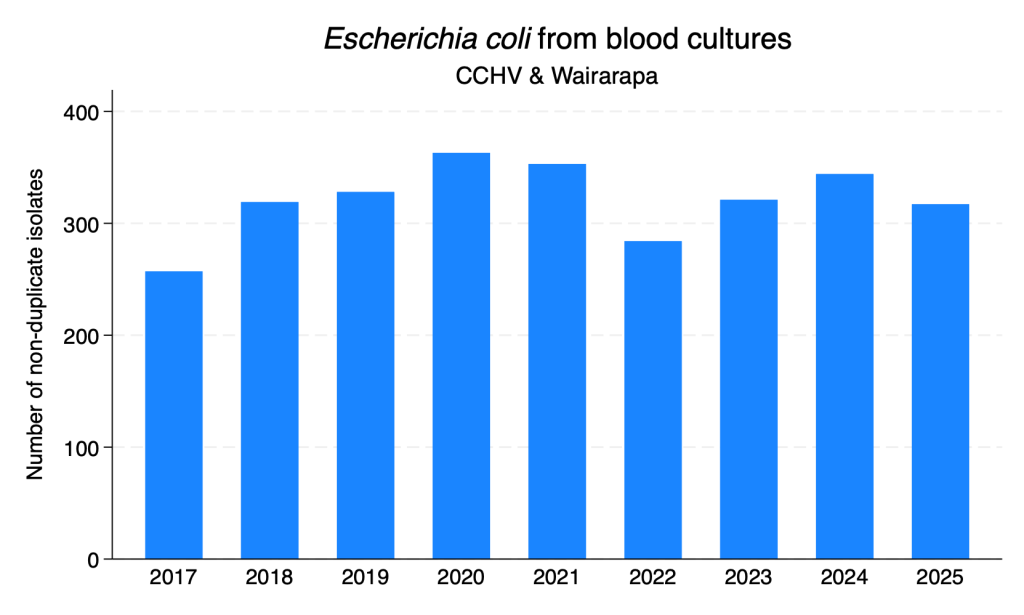
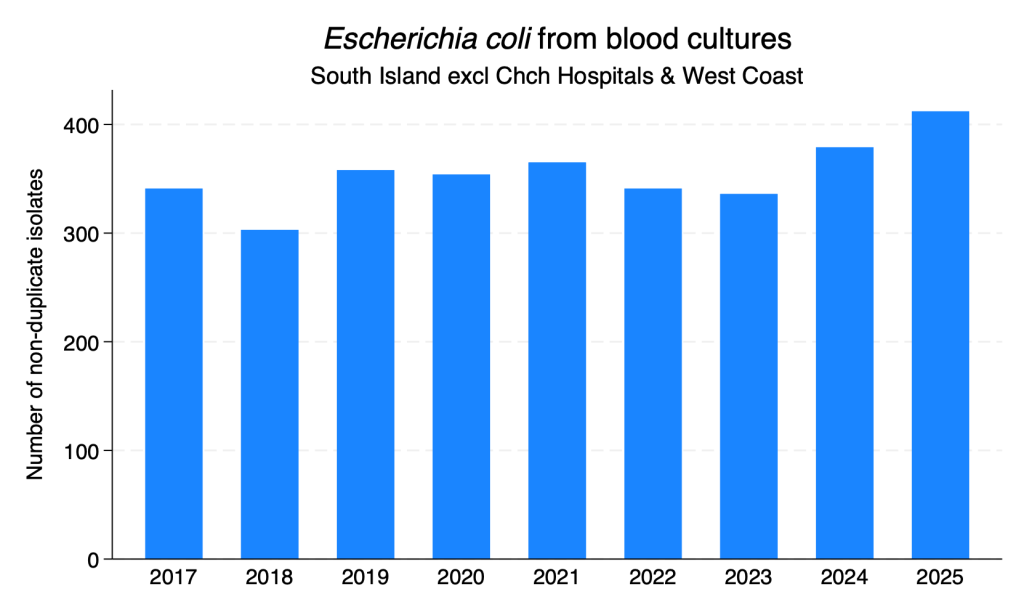
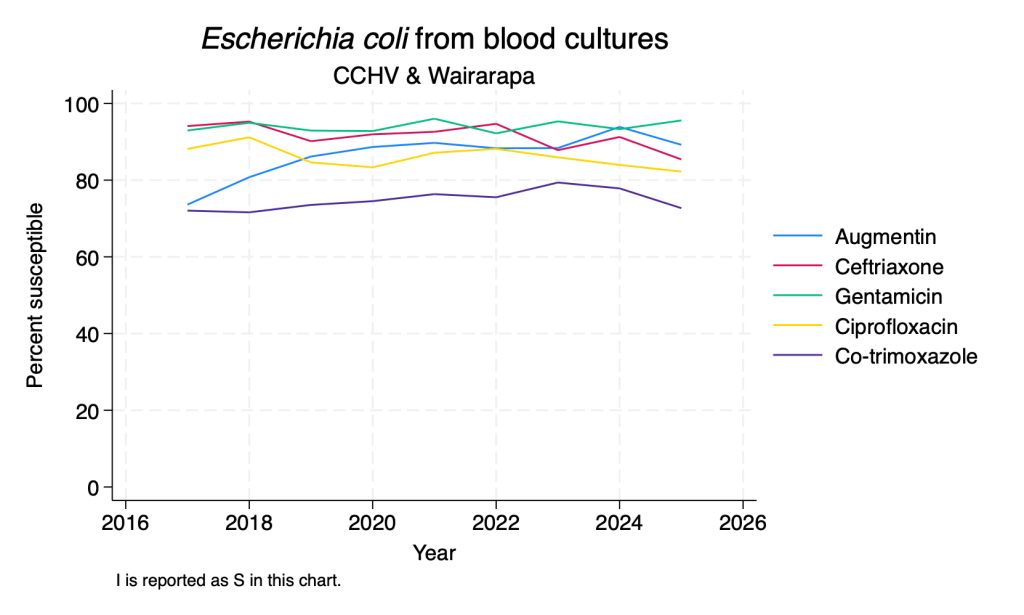
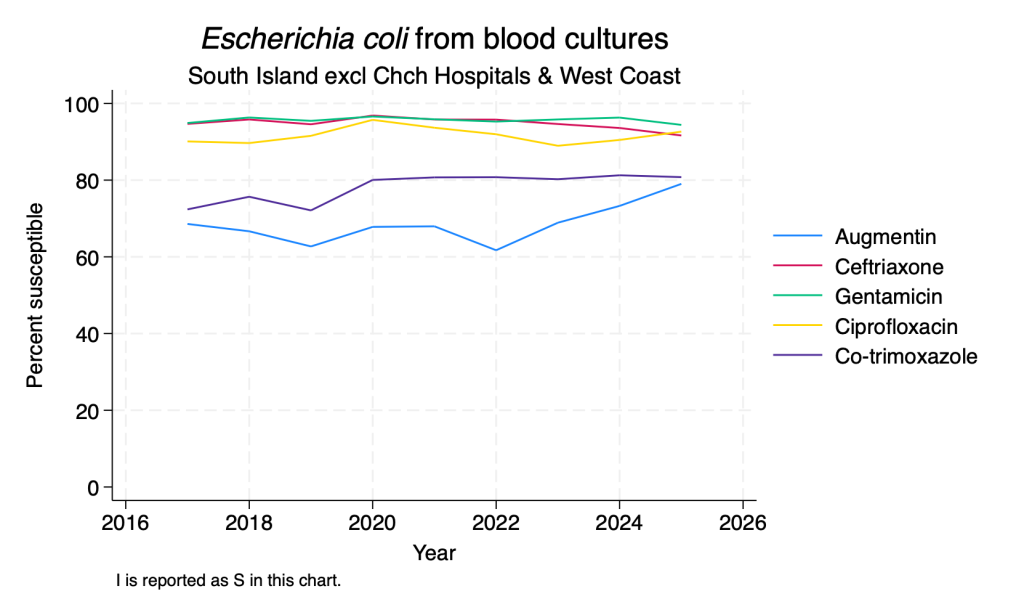
Data are derived from Awanui Labs that perform testing for public hospitals. E. coli is the commonest blood culture isolate. Duplicate isolates from the same person in the same year are removed. ESBL/ampC producers are not specifically reported; however, this can be inferred as the inverse to the % susceptible to ceftriaxone. The incidence charts are not yet reported by age band – to follow.
Commentary
- Similar to the urine susceptibility charts, the proportion of bloodstream E. coli isolates with ESBL/ampC production is rising. This is seen as a reduction in ceftriaxone susceptibility over time.
Klebsiella pneumoniae – community urine isolates
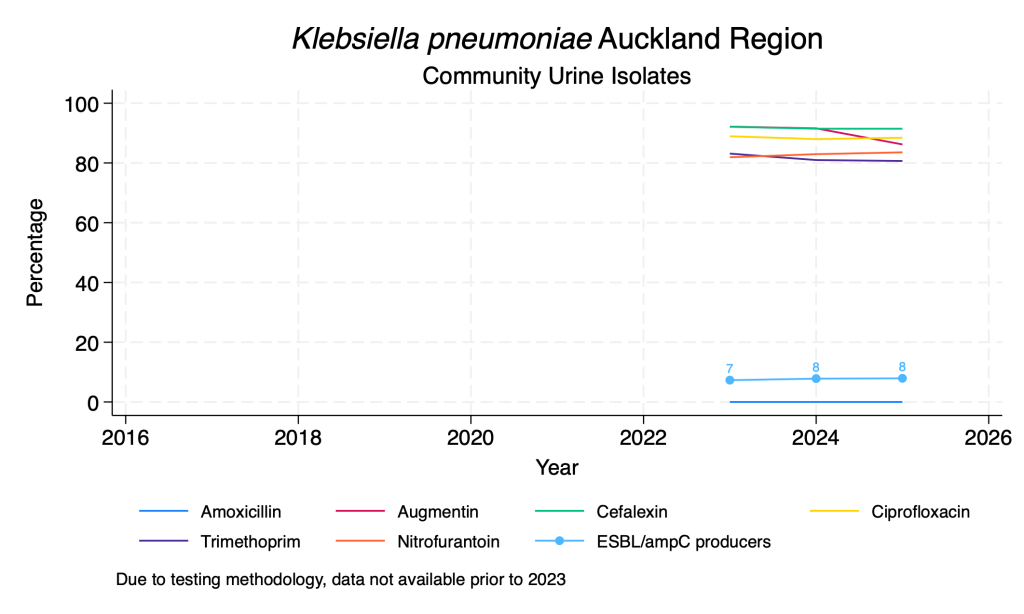
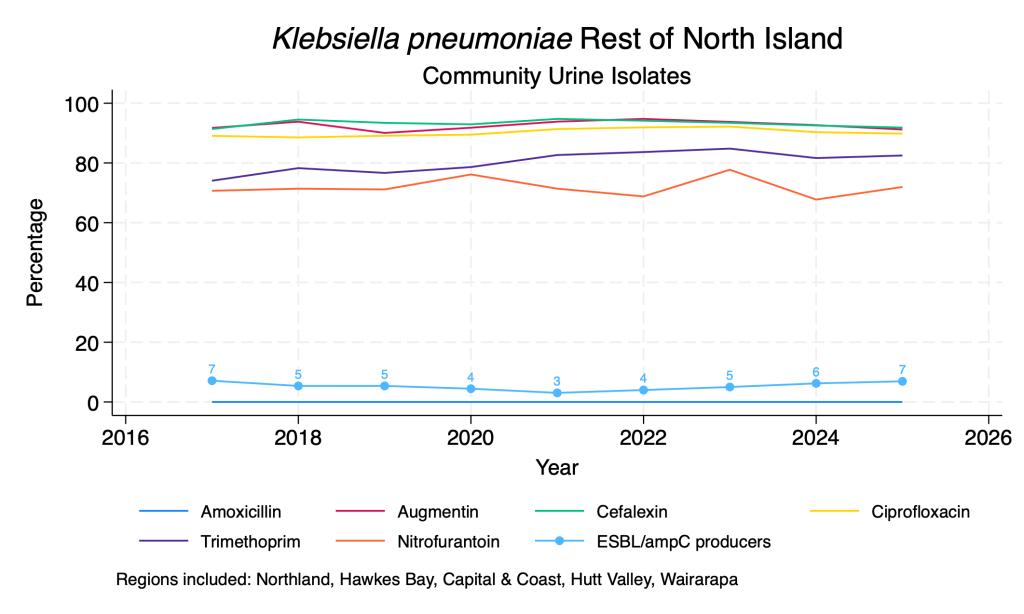
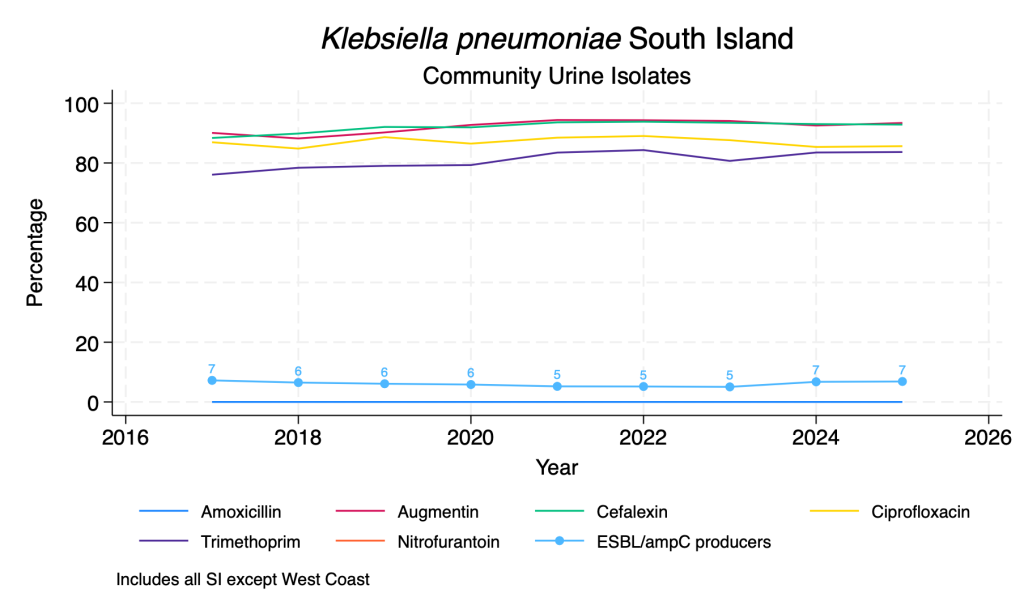
Data derived from community urine samples. K. pneumoniae is the second commonest urinary isolate. Duplicate isolates from the same person in the same year with the same resistance pattern are removed. ESBL/ampC production is inferred from resistance to any third-generation cephalosporin. Due to lower numbers, ESBL/ampC production by ethnicity is not reported.
Commentary
- Susceptibility to the common oral agents is relatively stable over time.
- The proportion of isolates with ESBL/ampC production has seen minor fluctuations over the time period, with the suggestion of a slow rise over the past 3-4 years.
Klebsiella pneumoniae – bloodstream isolates
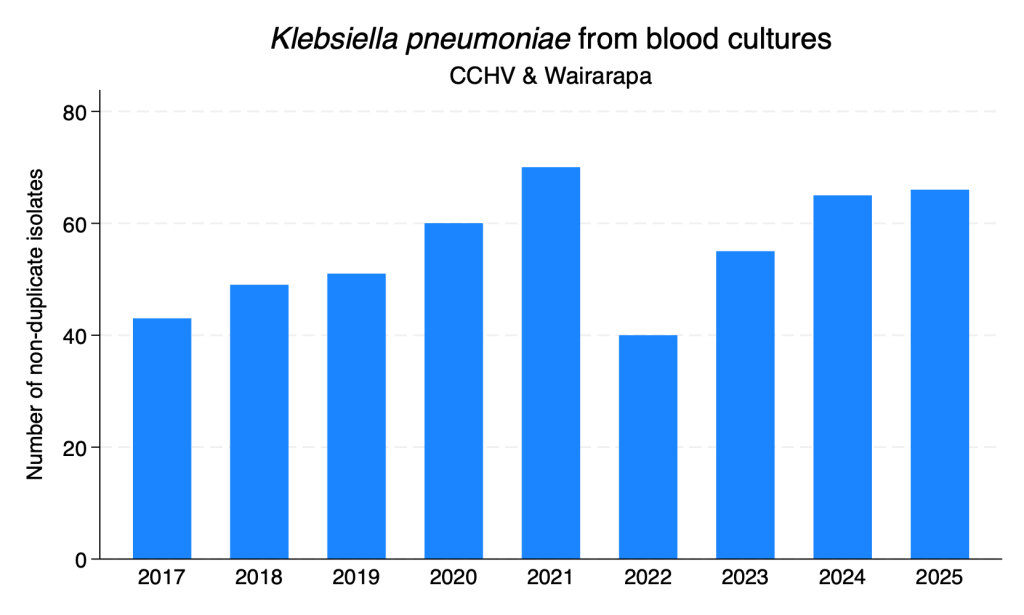
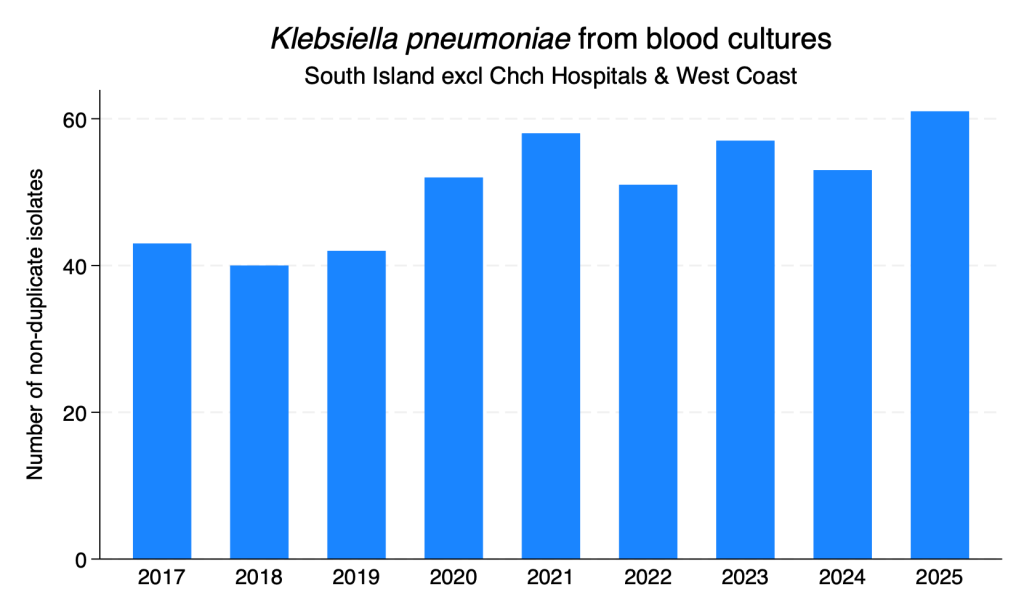
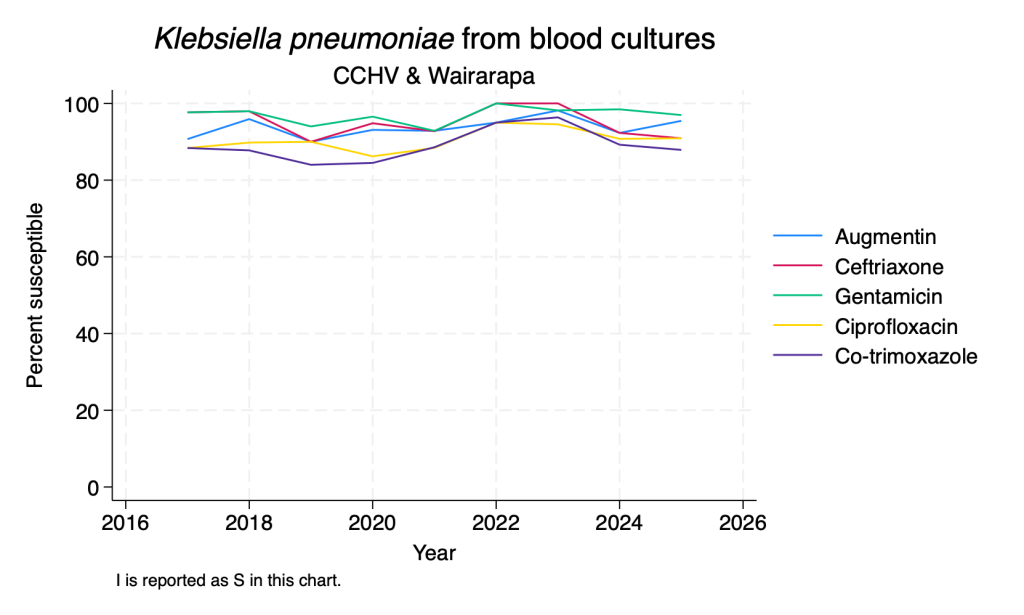
Data are derived from Awanui Labs that perform testing for public hospitals. K. pneumoniae is the second commonest gram-negative blood culture isolate but is far less common than E. coli. Duplicate isolates from the same person in the same year are removed. ESBL/ampC producers are not specifically reported; however, this can be inferred as the inverse to the % susceptible to ceftriaxone.
Commentary
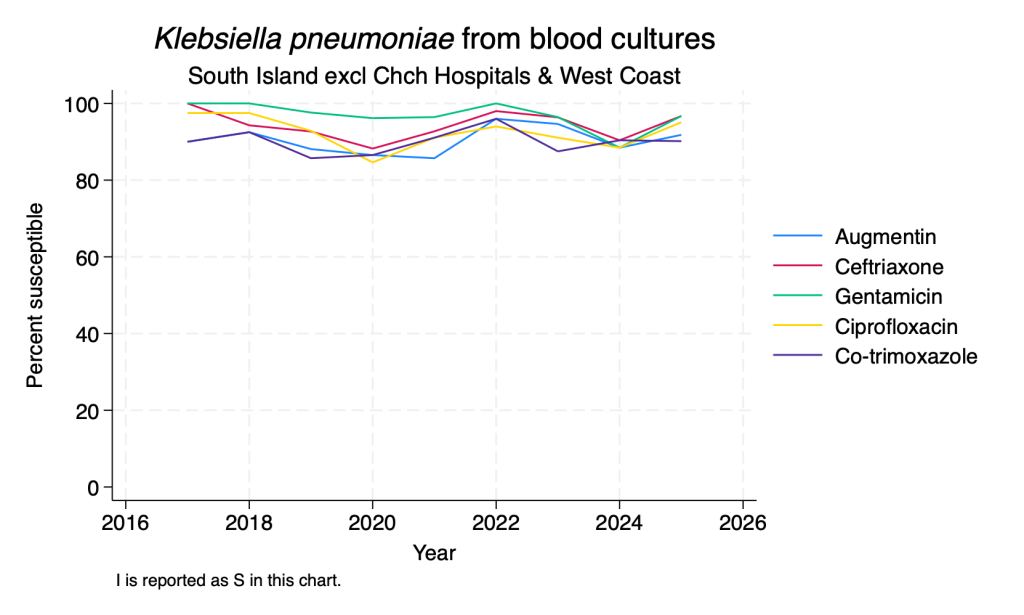
- Allowing for year-on-year variability, susceptibility to the main agents is relatively stable over time.
- There was a significant reduction in incidence in CCHV and Wairarapa in 2022. The reason for this is unclear at this point.
Staphylococcus aureus – community swab isolates
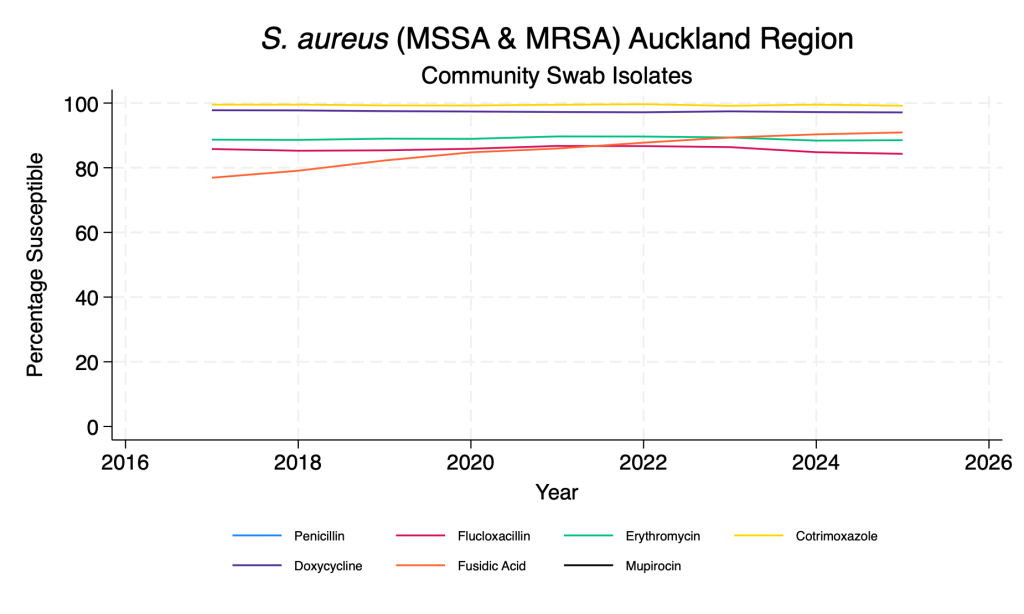
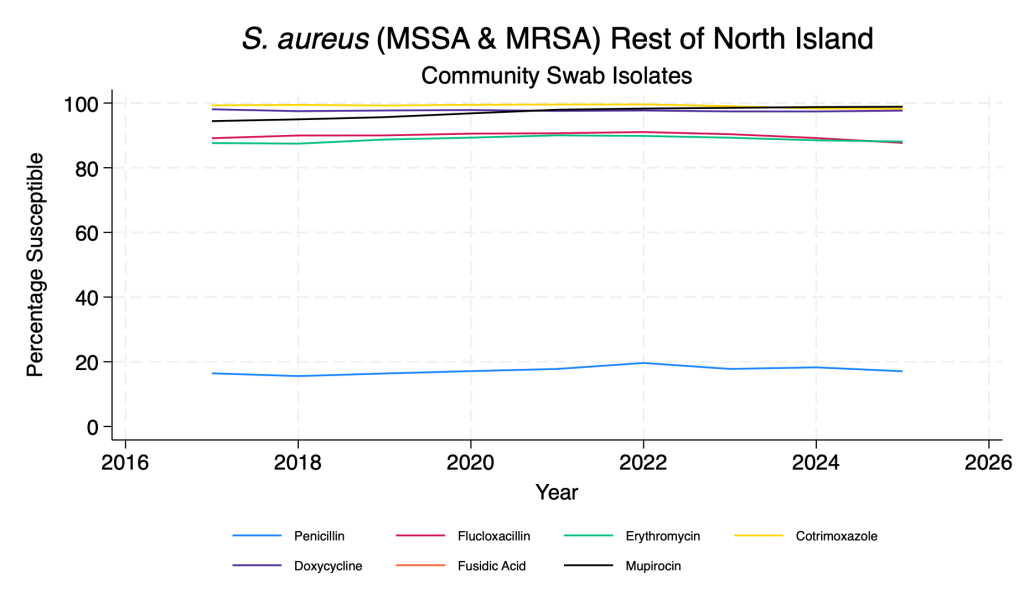
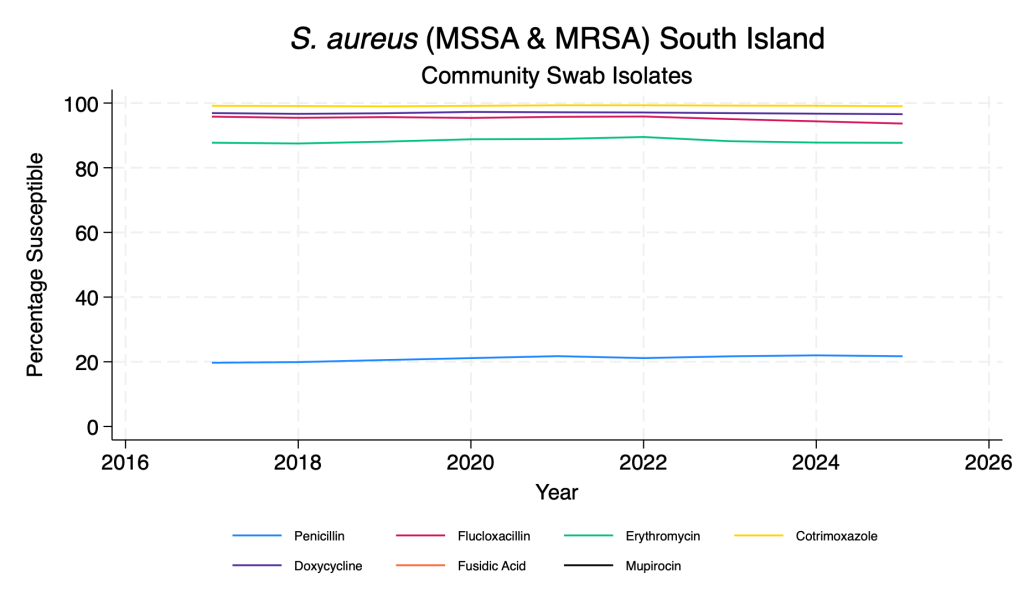
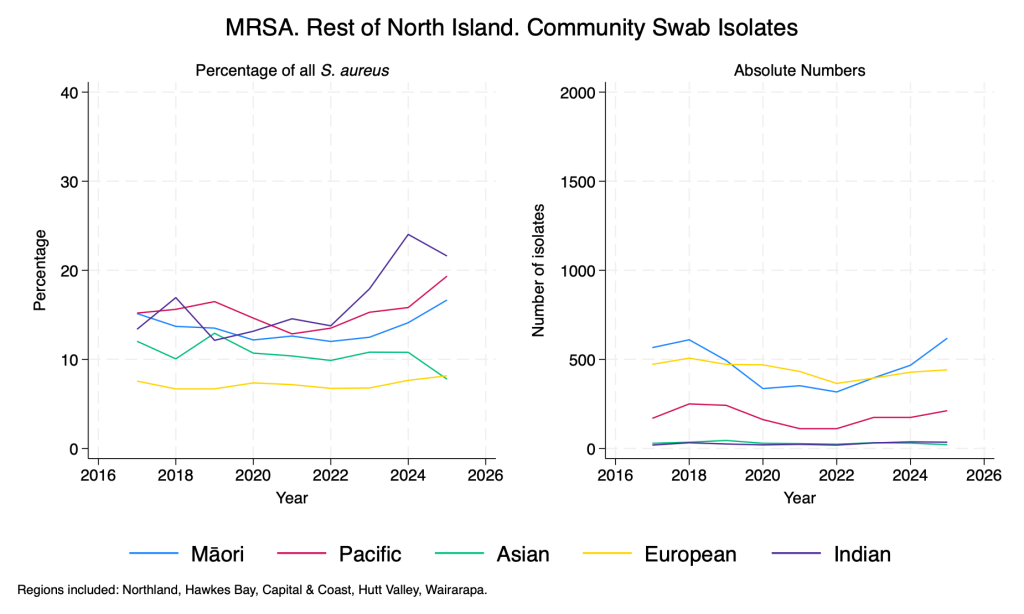
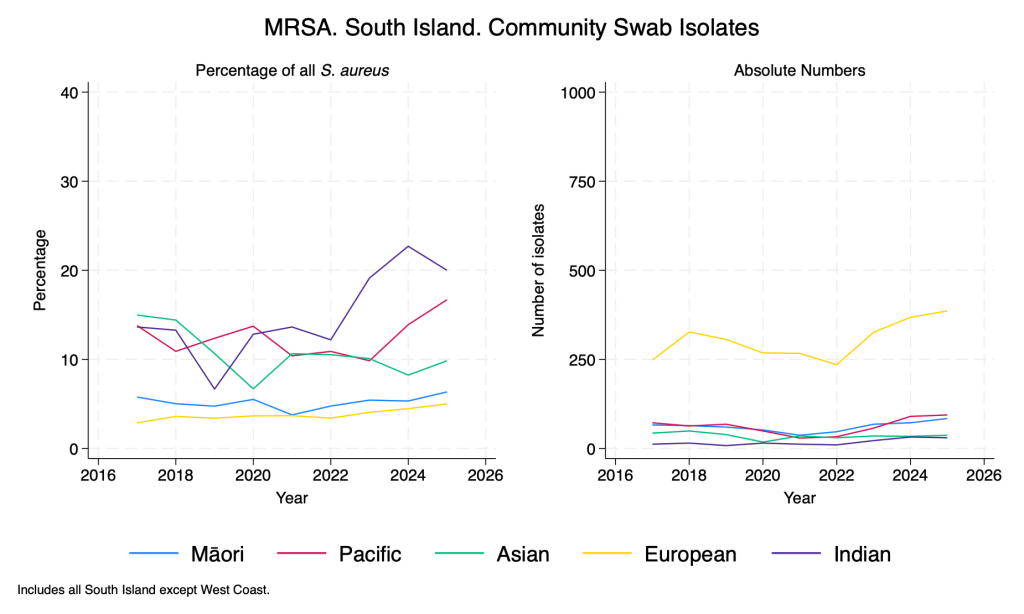
These data are derived from community swab samples. S. aureus is by far the commonest Gram-positive organism isolated. Duplicate isolates from the same person in the same year with the same resistance pattern are removed. Data are presented here for all S. aureus (methicillin susceptible and resistant – MSSA and MRSA) and for MRSA only.
Commentary
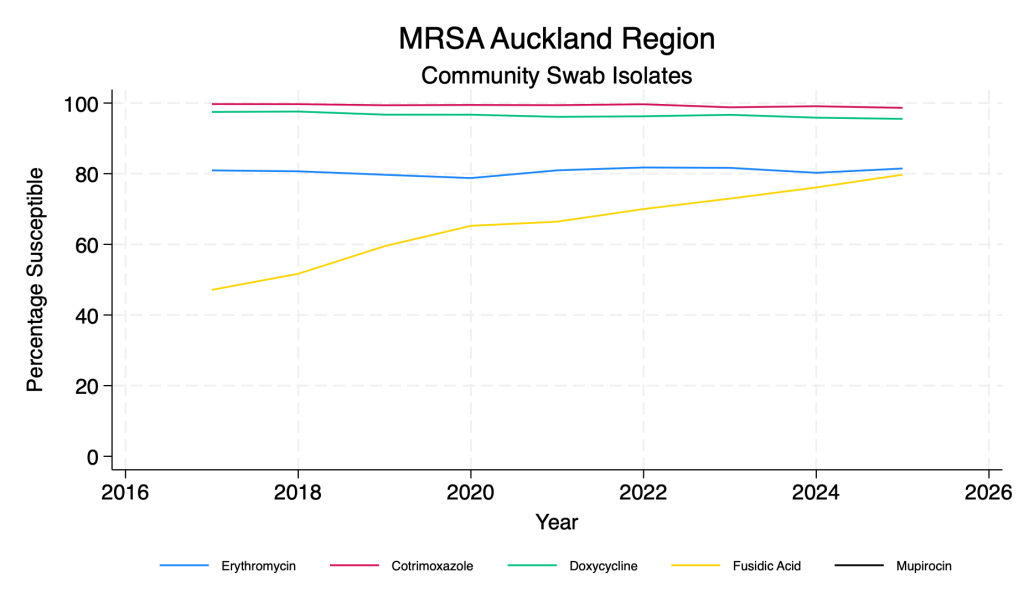
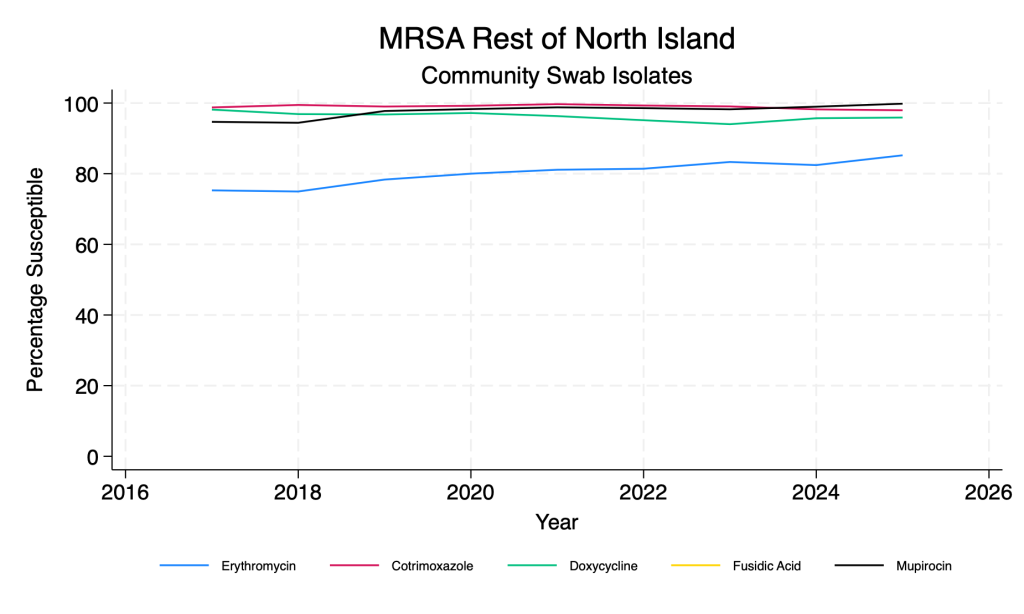
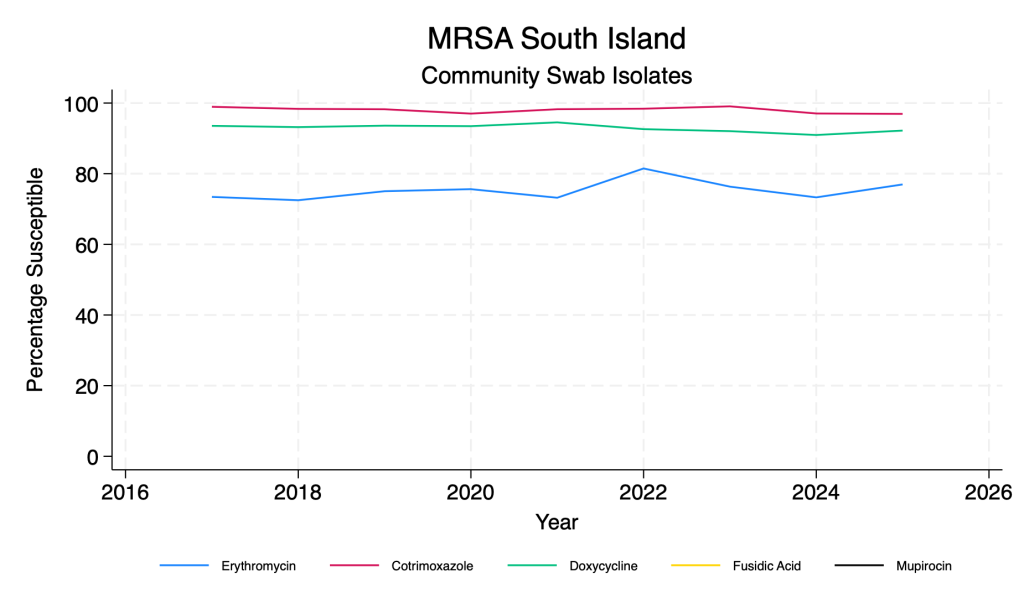
- In the past 2-3 years there has been a gradual reduction in flucloxacillin susceptibility (i.e. an increase in MRSA). MRSA is more common further north in New Zealand.
- Fusidic acid susceptibility has improved dramatically across the time period.
- Co-trimoxazole and doxycycline remain reliable agents for both MSSA and MRSA.
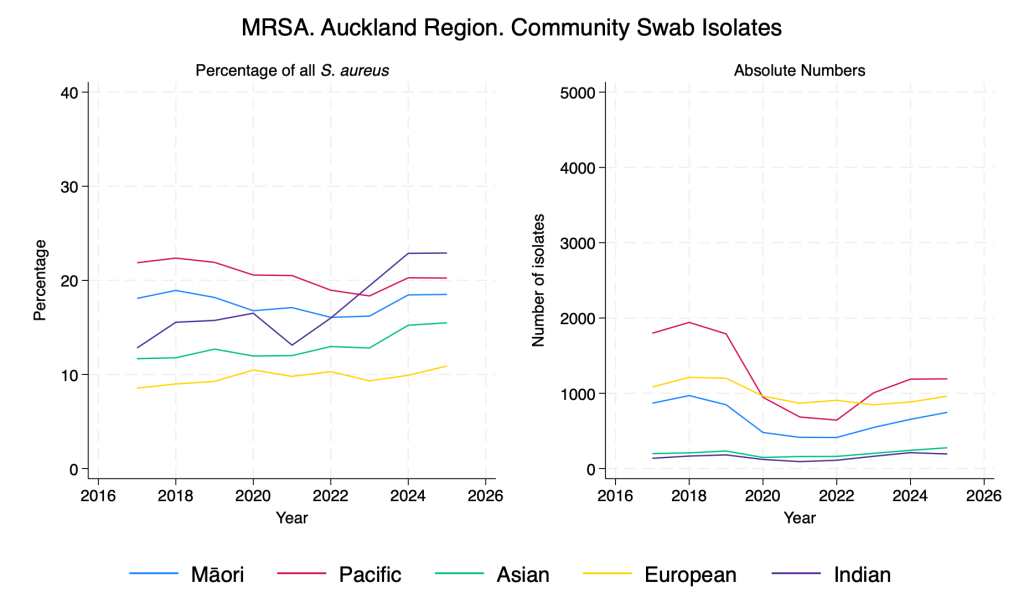
- Similar to Gram-negative resistance, there are clear differences in the proportion of S. aureus isolates that are MRSA according to ethnicity, with recent significant rises in those of Indian ethnicity.
Staphylococcus aureus – main agents – community swab isolates
MRSA – main agents – community swab isolates
MRSA – community swab isolates – by ethnicity
Staphylococcus aureus – bloodstream isolates
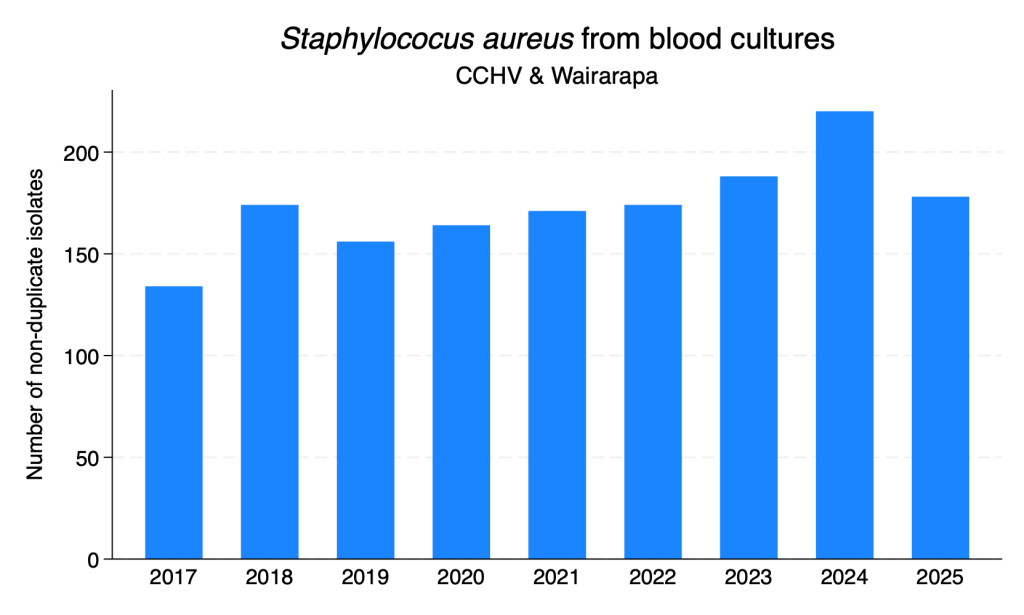
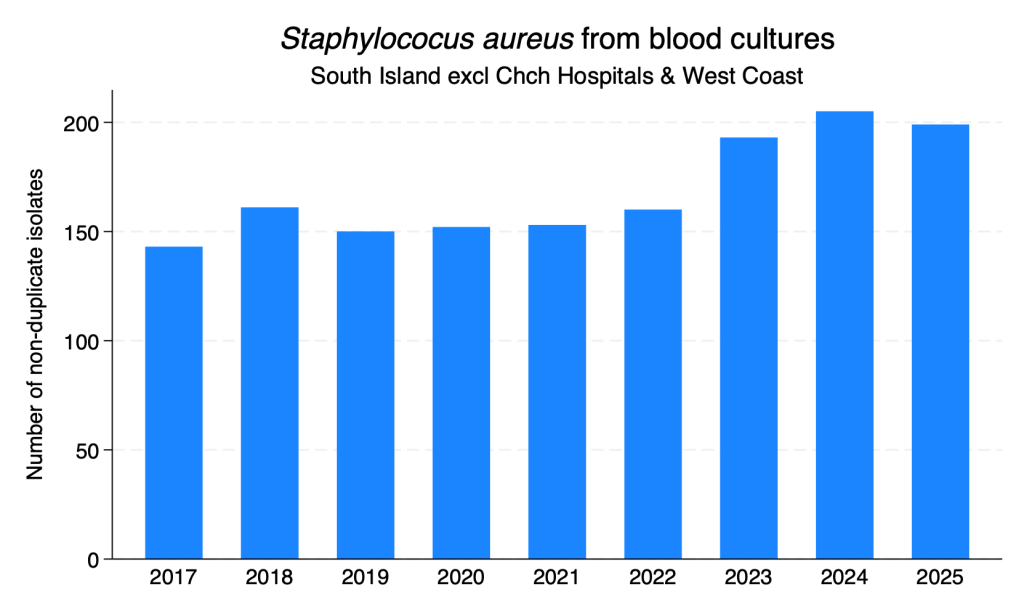
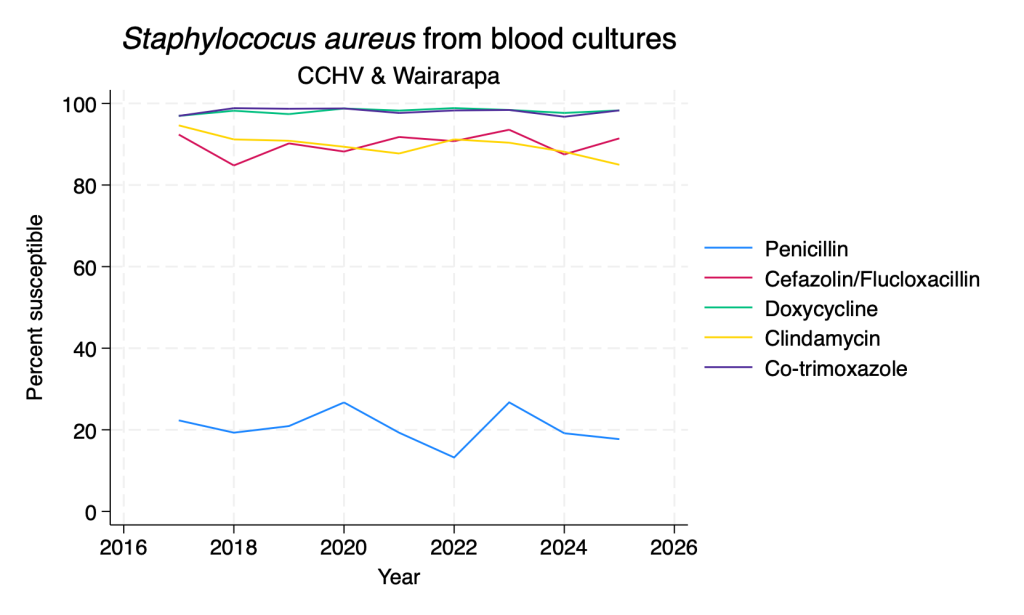
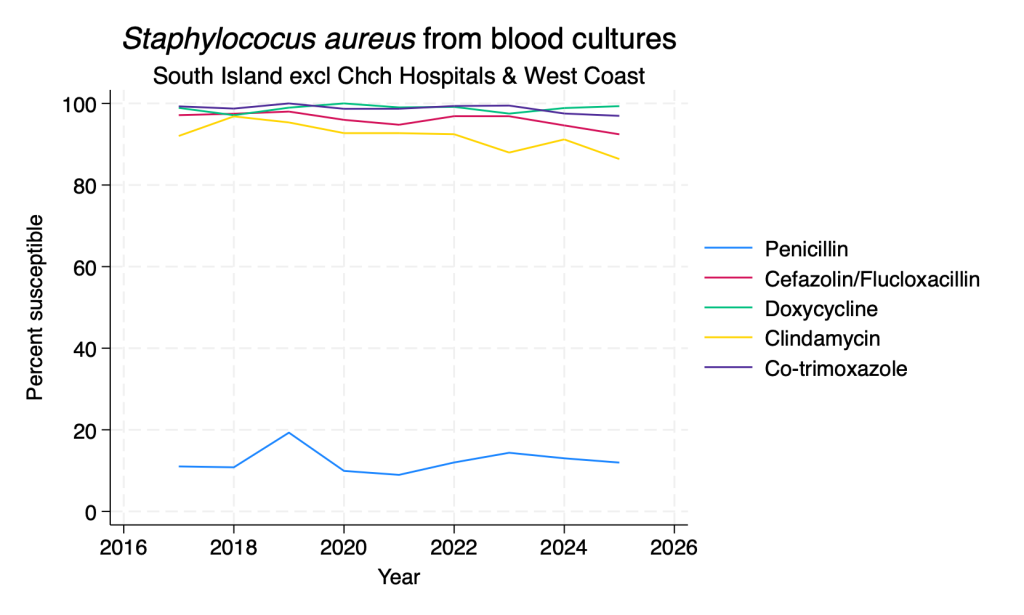
Data are derived from Awanui Labs that perform testing for public hospitals. S. aureus is the second commonest blood culture isolate. Duplicate isolates from the same person in the same year are removed. MRSA is not specifically reported; however, this can be inferred as the inverse to the % susceptible to cefazolin/flucloxacillin. It would be preferable to separate the incidence charts into community and healthcare-associated, however this is not currently possible with the available data. The incidence charts are not yet reported by age band – to follow.
Commentary
- MRSA bloodstream infection is less common in the South Island hospitals, however this does appear to be gradually increasing over time.
- Clindamycin susceptibility also appears to be gradually reducing. Susceptibility to other agents appears stable.
- The lower penicillin susceptibility in South Island hospitals is likely an artefact due to a lower proportion of isolates being tested in those laboratories.
Streptococcus pneumoniae – bloodstream and CSF isolates
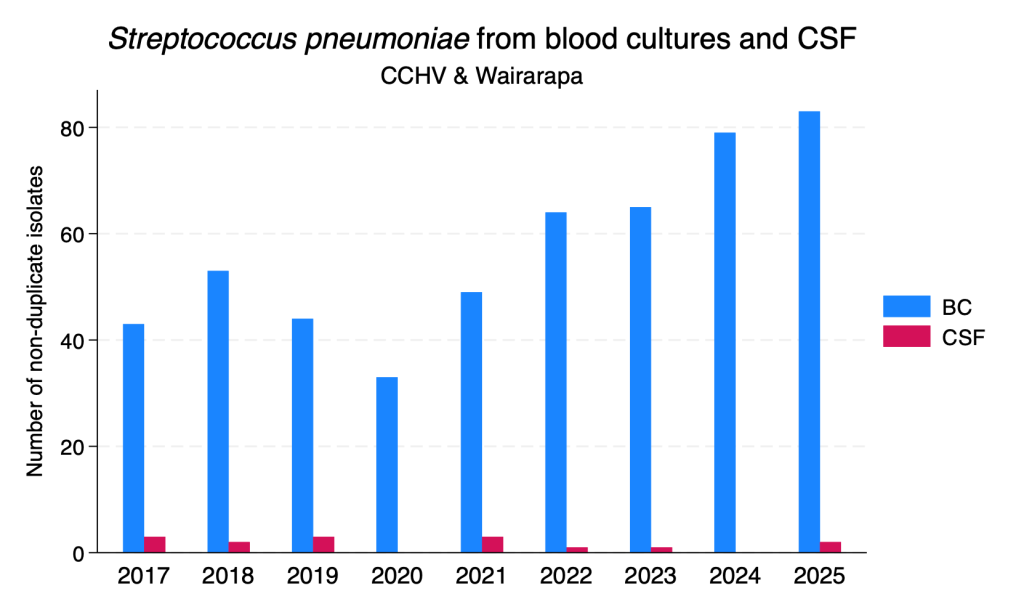
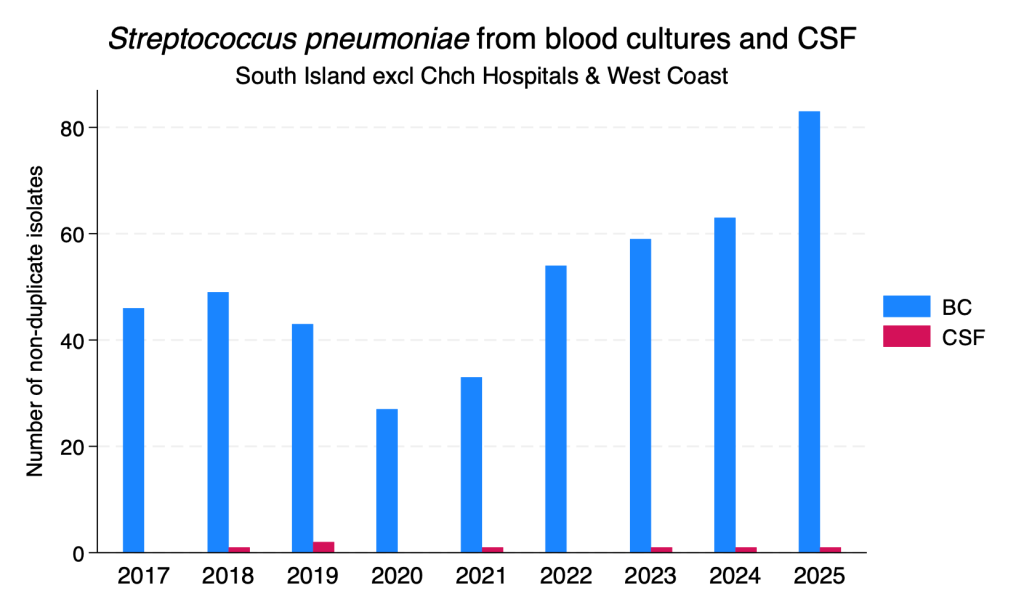
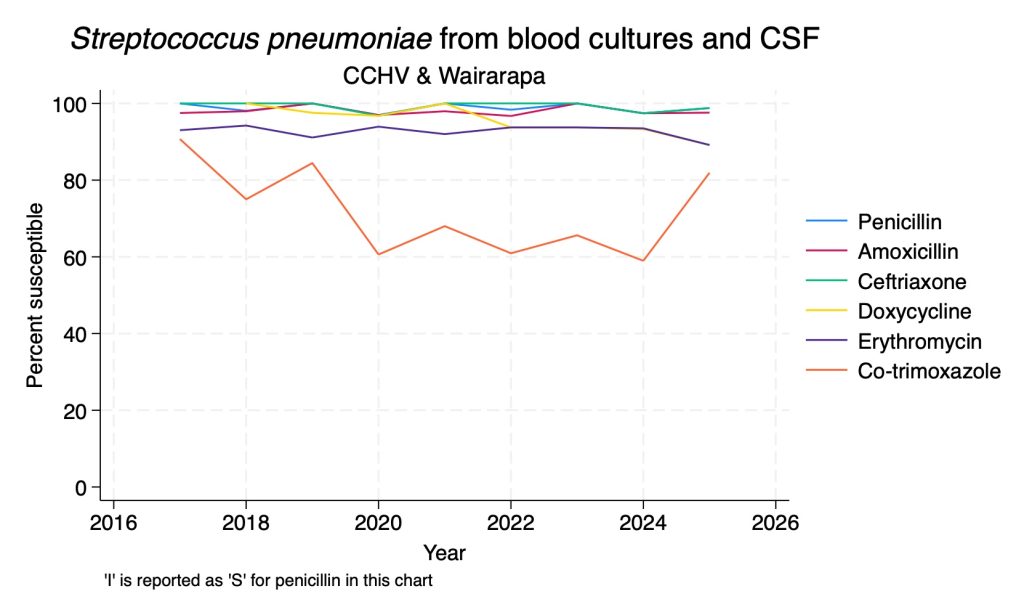
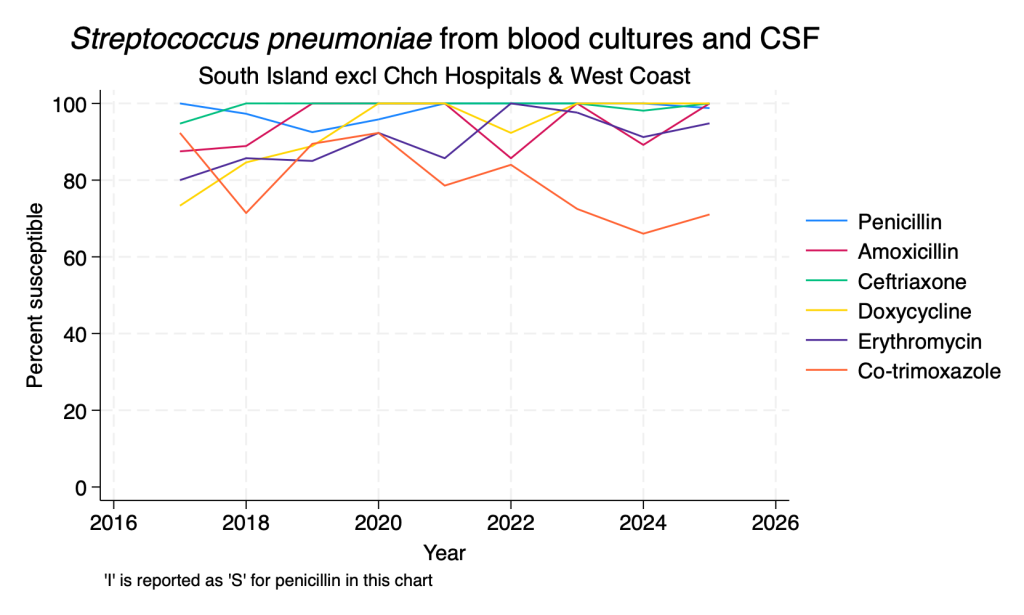
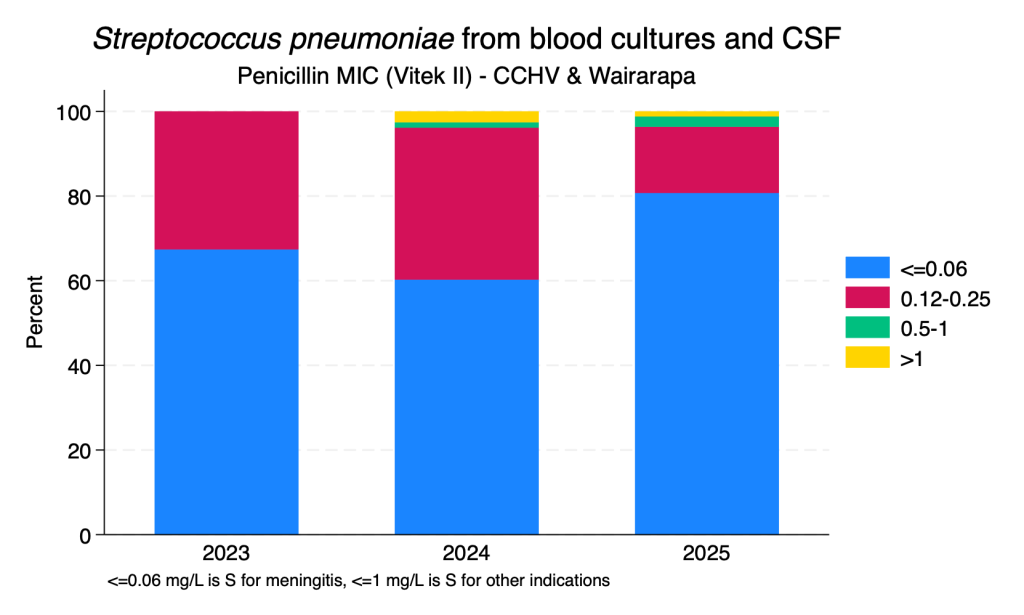
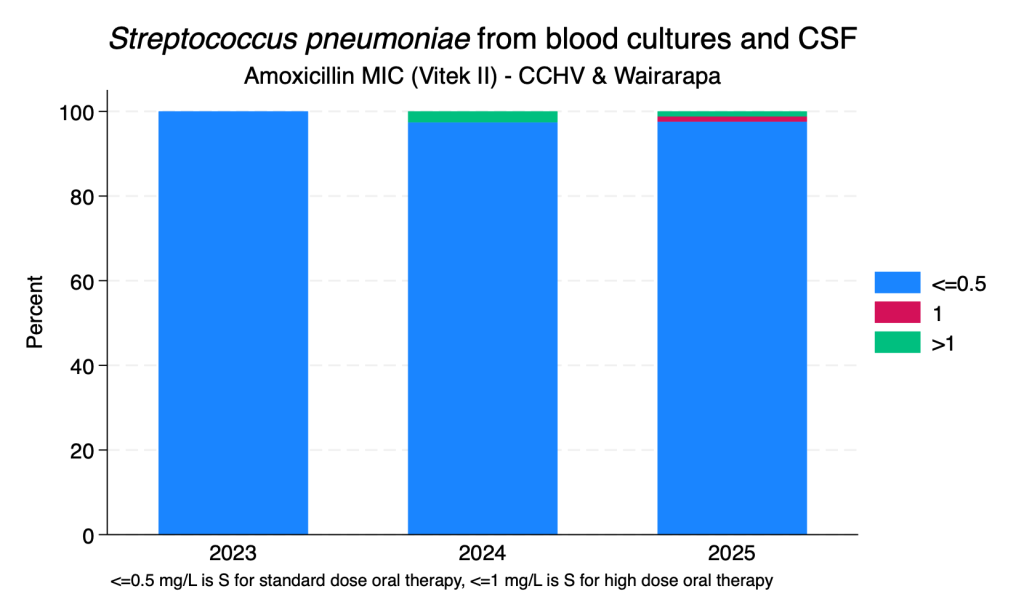
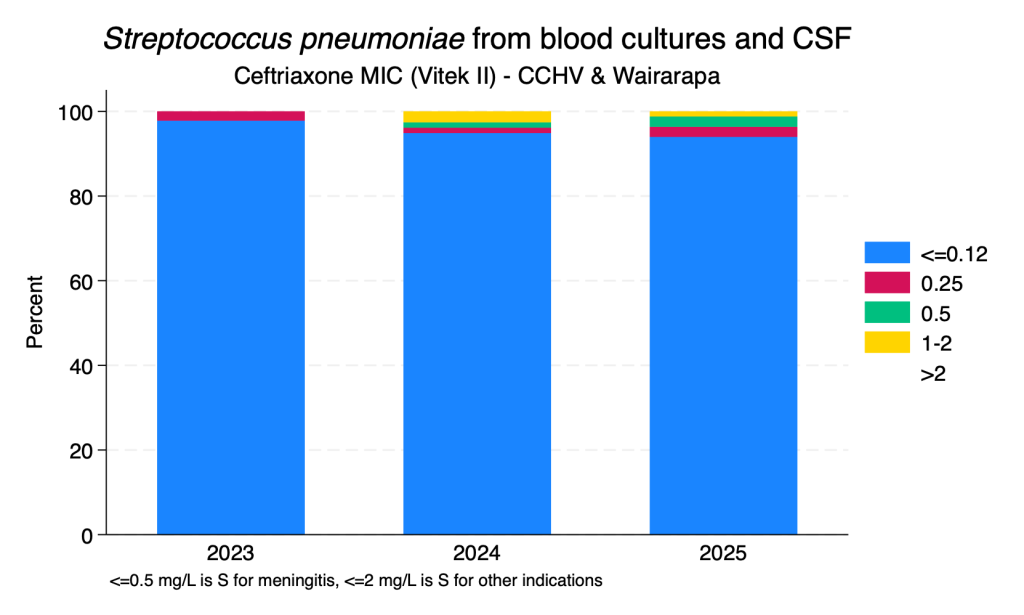
Data are derived from Awanui Labs that perform testing for public hospitals. S. pneumoniae is the second commonest community-onset gram-positive isolate. Duplicate isolates from the same person in the same year are removed. Susceptibility to common agents is reported in broad categories of S vs R for all locations. Specific MICs for the three common beta-lactam agents are limited to CCHV and Wairarapa because all isolates have MIC testing in these labs (since 2023), whereas testing is selective elsewhere. The incidence charts are not yet reported by age band – to follow.
Commentary
- The absolute number of positive blood cultures is currently rising.
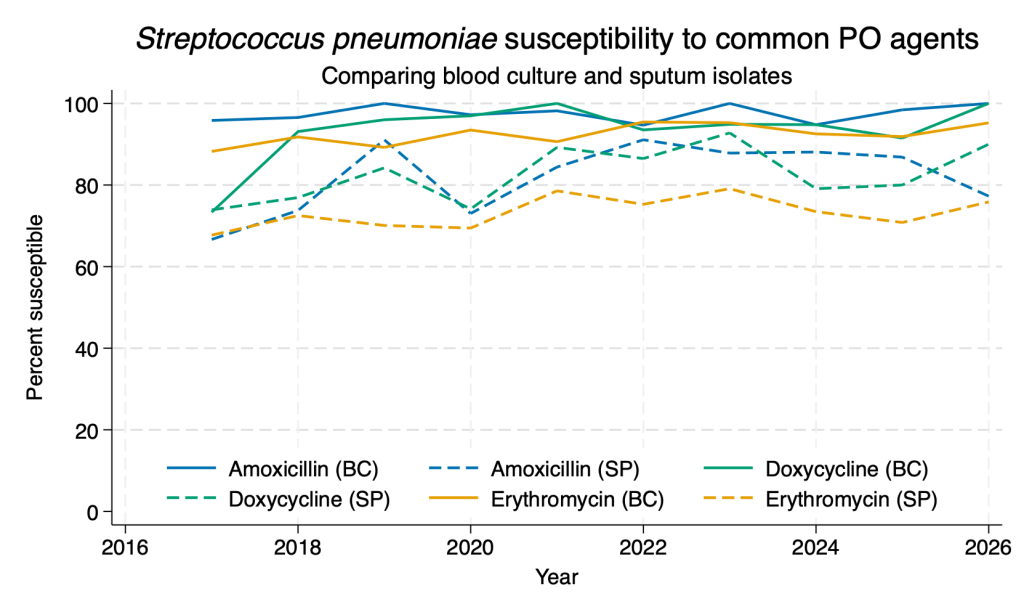
- Resistance to the two main agents used to treat community-acquired pneumonia (amoxicillin and ceftriaxone) remains very rare.
- MICs to amoxicillin and ceftriaxone remain very low. Isolates with ceftriaxone MICs above the meningitis breakpoint are very rare in CCHV and Wairarapa.
- Penicillin MICs remain within the range that is suitable for non-meningitis indications for the vast majority.
- Sputum isolates display resistance to common oral agents far more commonly than invasive isolates. This is likely due to the fact that sputum commonly detects commensal organisms that are more likely to acquire resistance, but less likely to cause invasive disease. This is why sputum susceptibility patterns should not be used to determine suitable agents for treatment of invasive disease.
Difficult to treat urine organisms
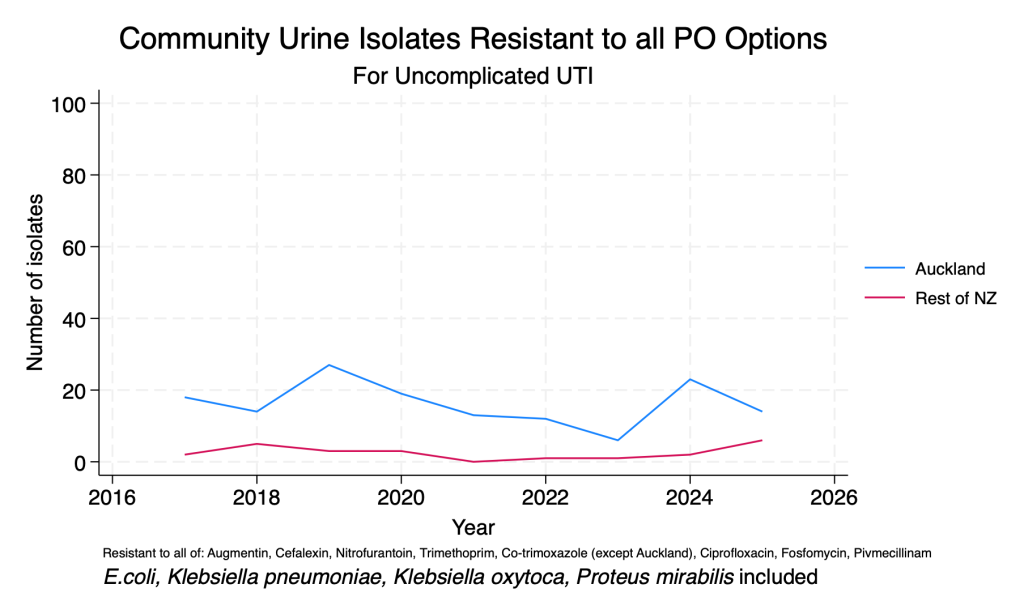
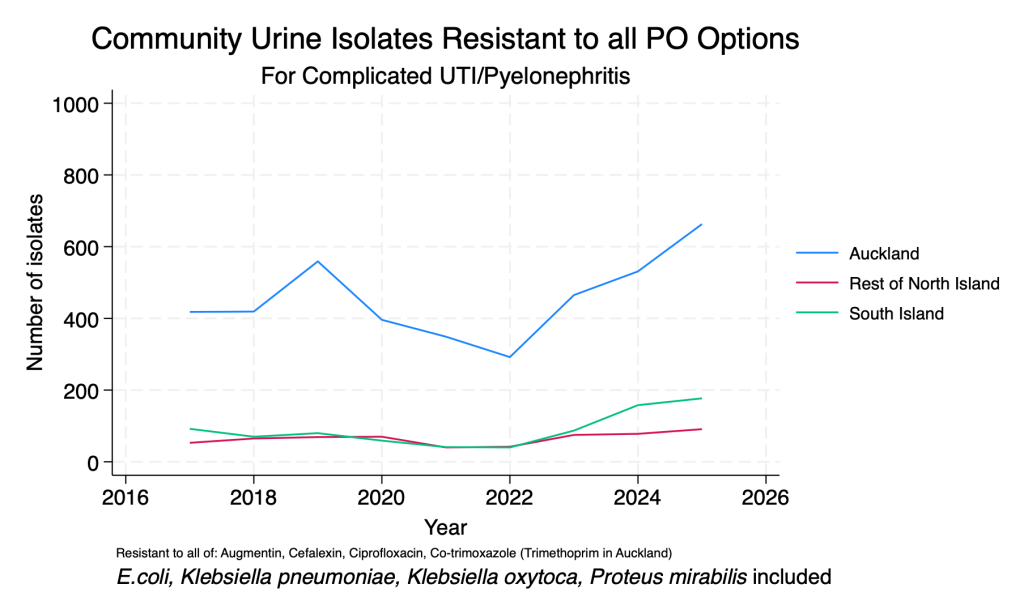
These data are presented to demonstrate the effects of AMR on the ability to treat common UTI organisms in the community setting. Difficult to treat organisms increase the risk of empiric treatment failure and may mean UTIs that could otherwise be treated with oral therapy require intravenous therapy. To be included, organisms must have been tested for all of the listed agents, which means numbers may fluctuate over time due to changes in lab methods.
Commentary
- Organisms testing resistant to all available oral agents suitable for uncomplicated UTI (i.e. cystitis) remain very rare in the community setting. A significant contributor to this is the reliability of nitrofurantoin.
- Organisms testing as resistant to all available oral agents suitable for treating complicated UTI are more common, with recent increases in absolute numbers. These results are derived from all urinary isolates (it is currently difficult to determine based on laboratory data on a large scale which patients have complicated UTI), so they are indicative only.
Carbapenemase-producing organisms (CPOs)
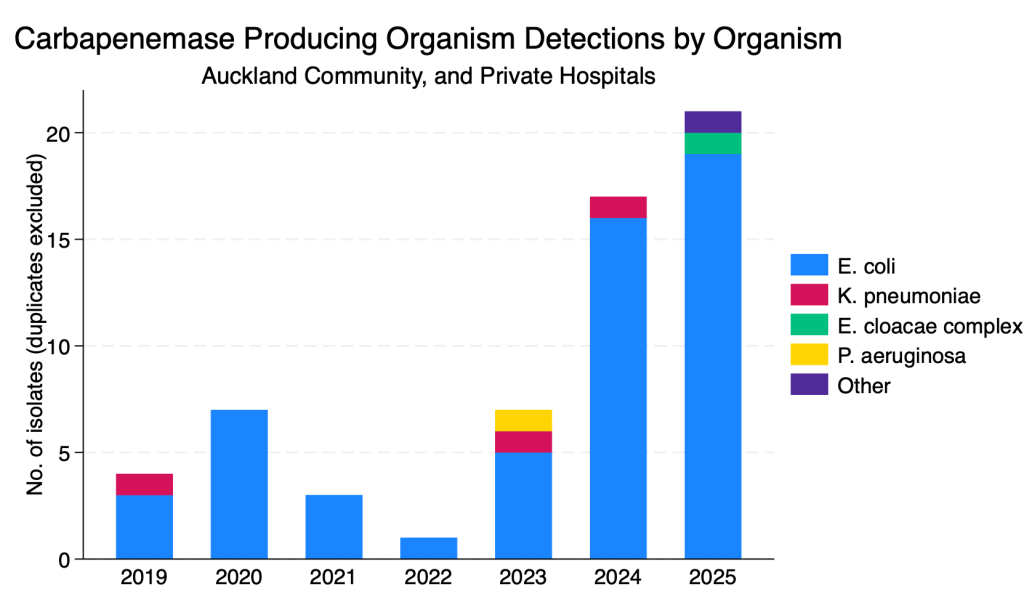
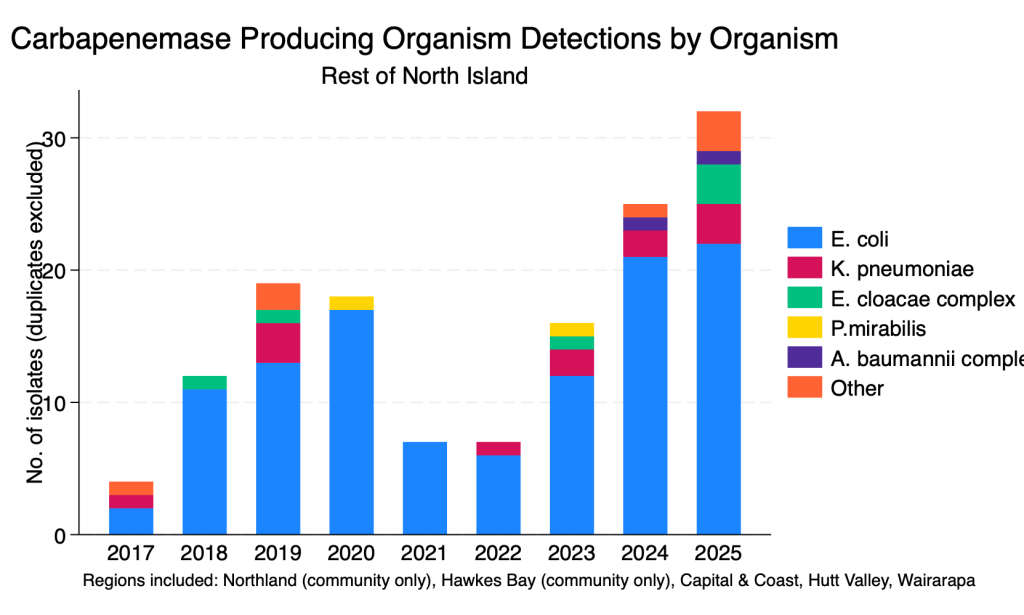
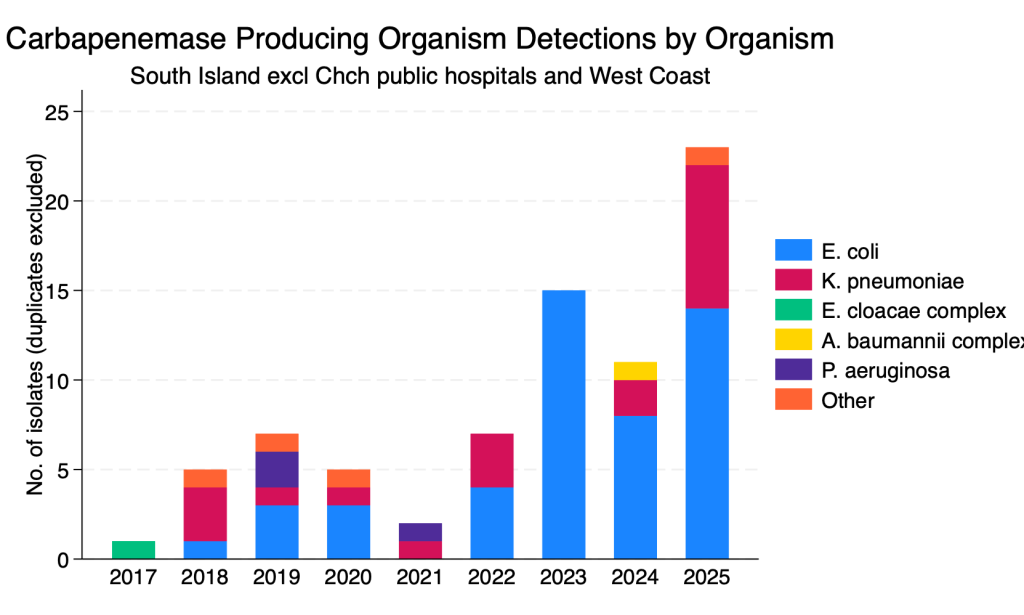
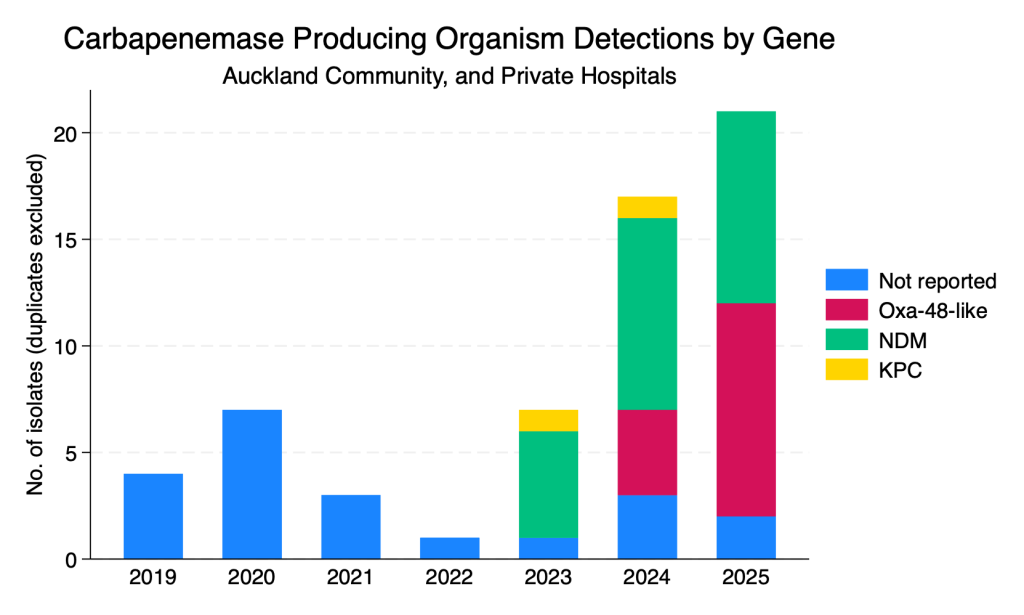
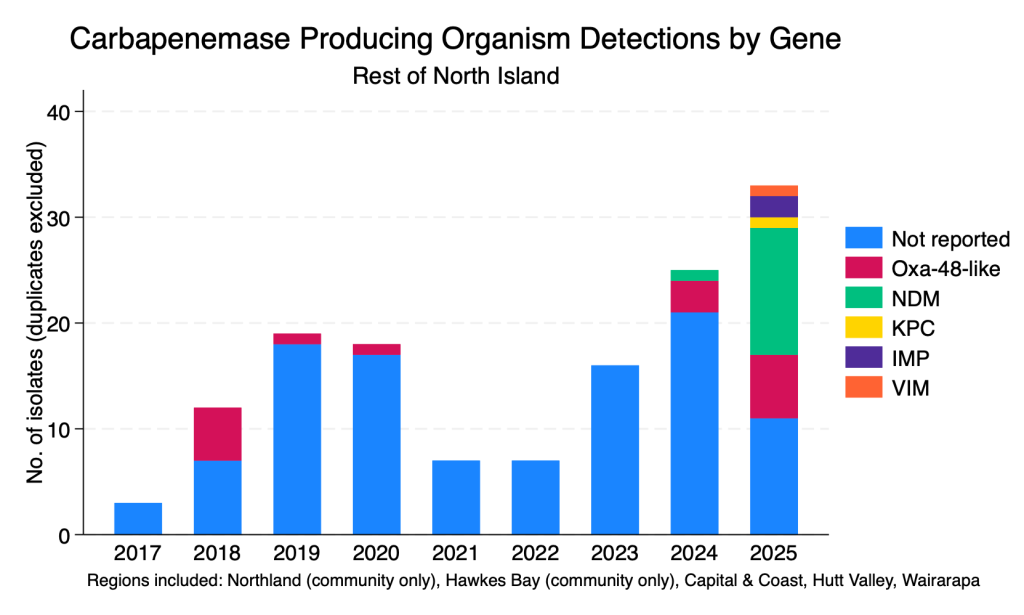
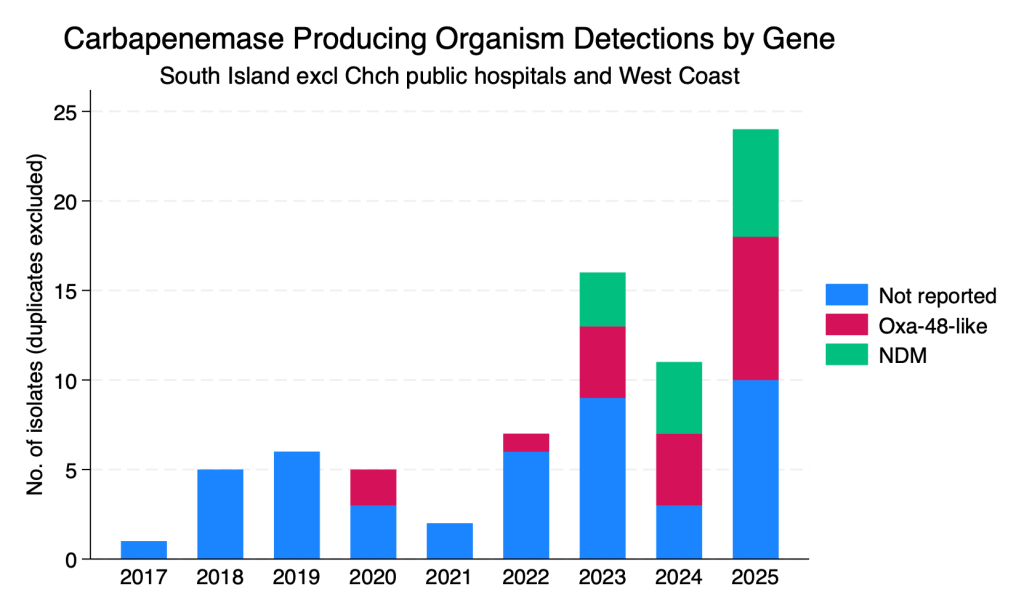
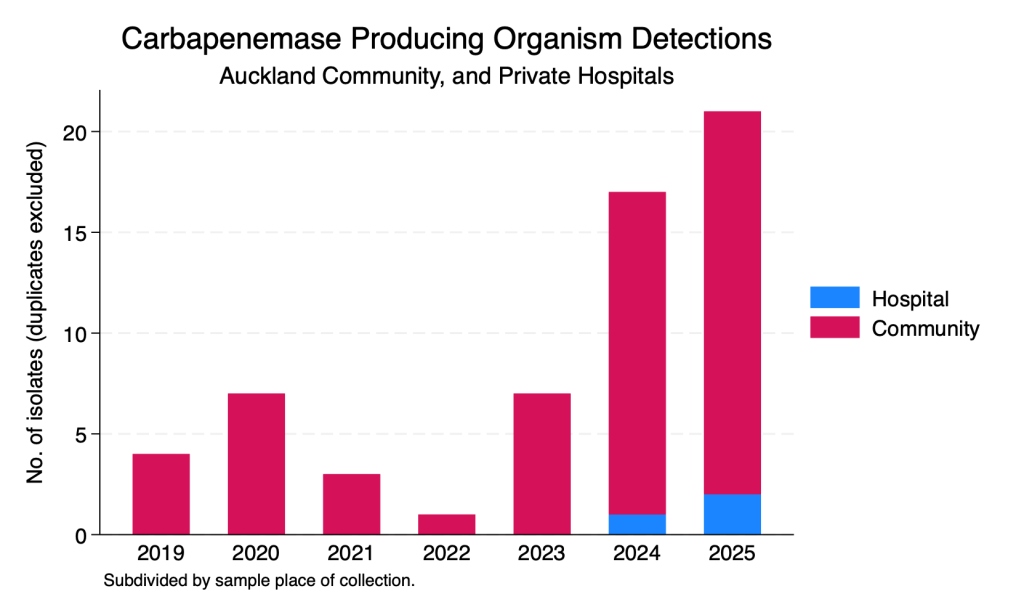
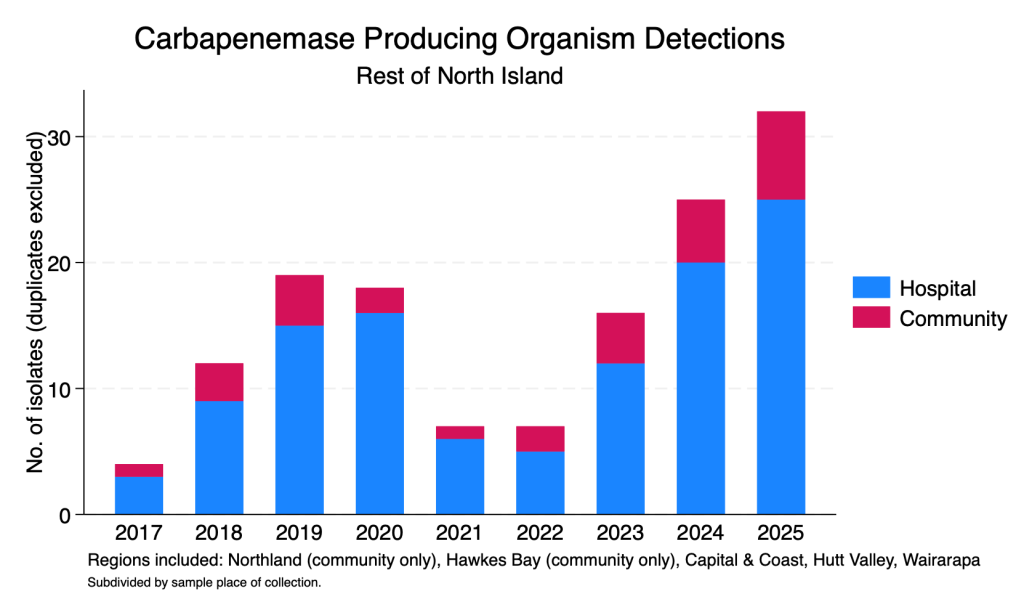
Data derived from all sample types across all Awanui Labs. Duplicate isolates from the same person with the same organism are removed. Due to changes in reporting over time it is difficult to extract the specific carbapenemase types from older data, however this reporting is now more robust.
Commentary
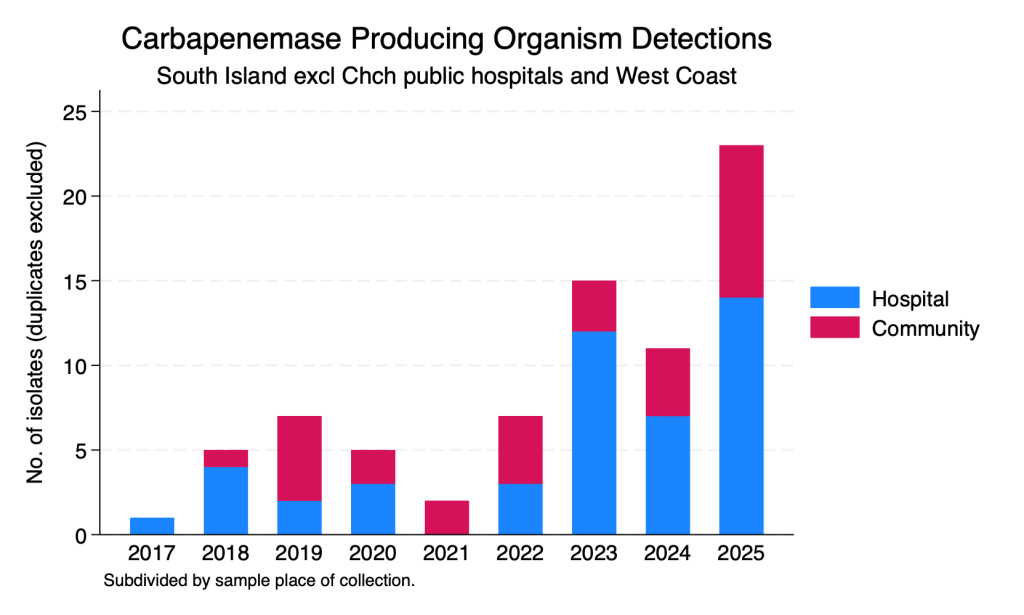
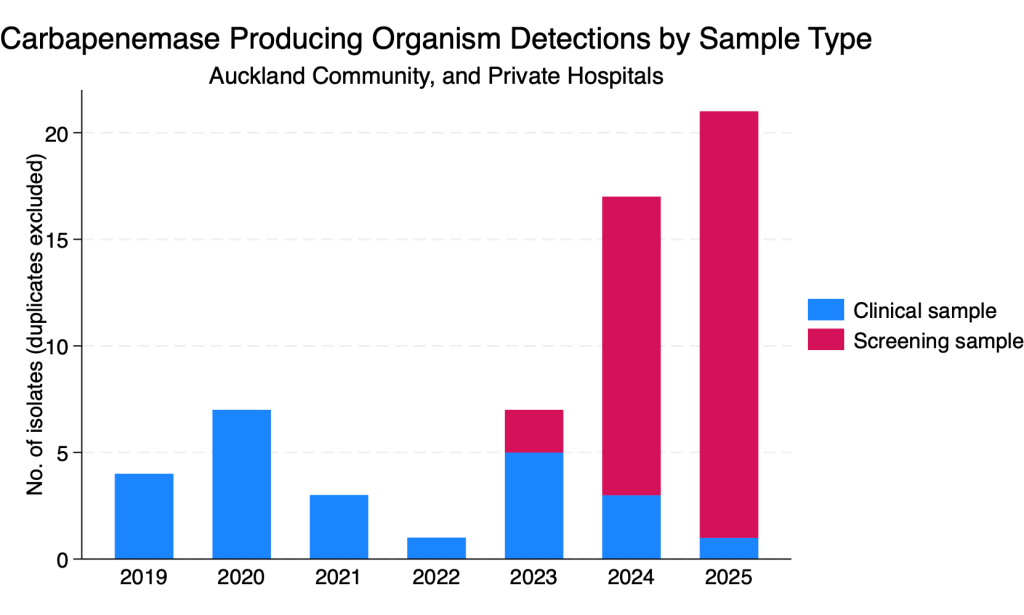
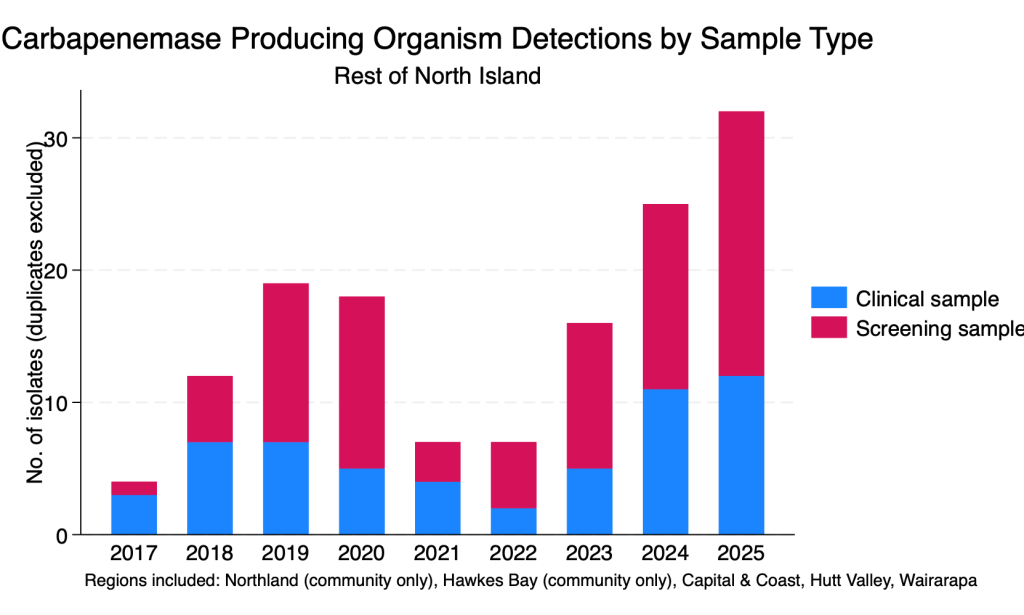
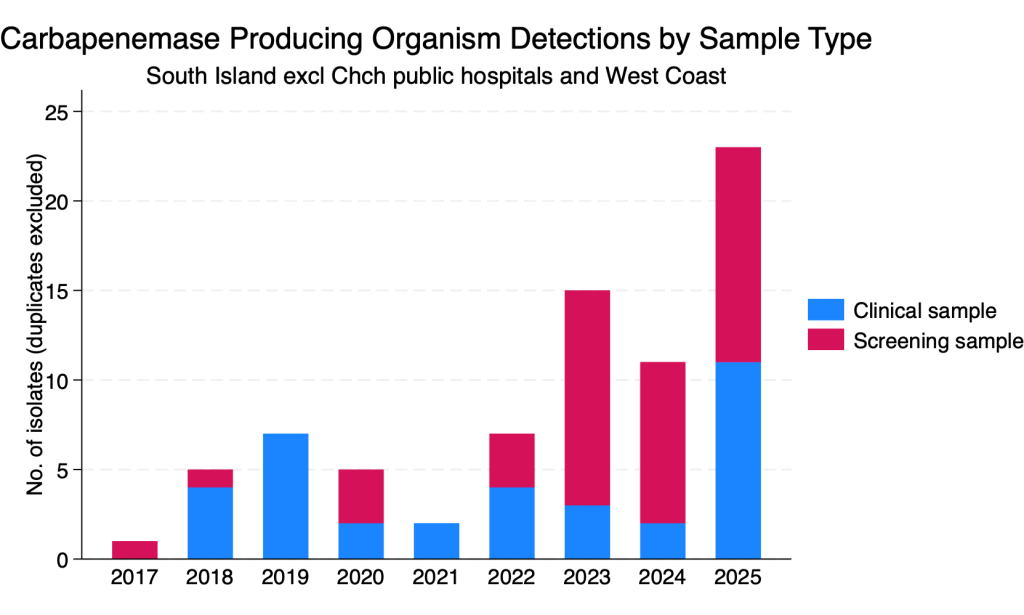
- CPOs represent the highest threat organisms from an AMR perspective.
- They remain rare in Aotearoa but detections are increasing significantly over time.
- They are predominantly detected in people who have recently arrived from or travelled overseas (especially if receiving healthcare overseas) – this is why the COVID/lockdown years saw reduced numbers.
CPOs by organism
CPOs by gene
CPOs by hospital community
CPOs by sample type
Other organisms of interest
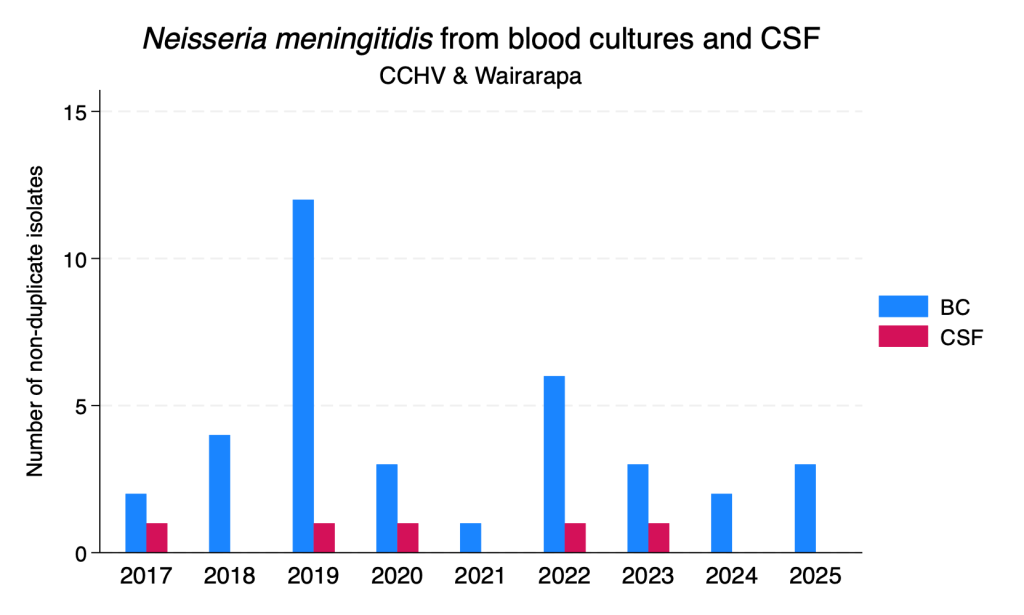
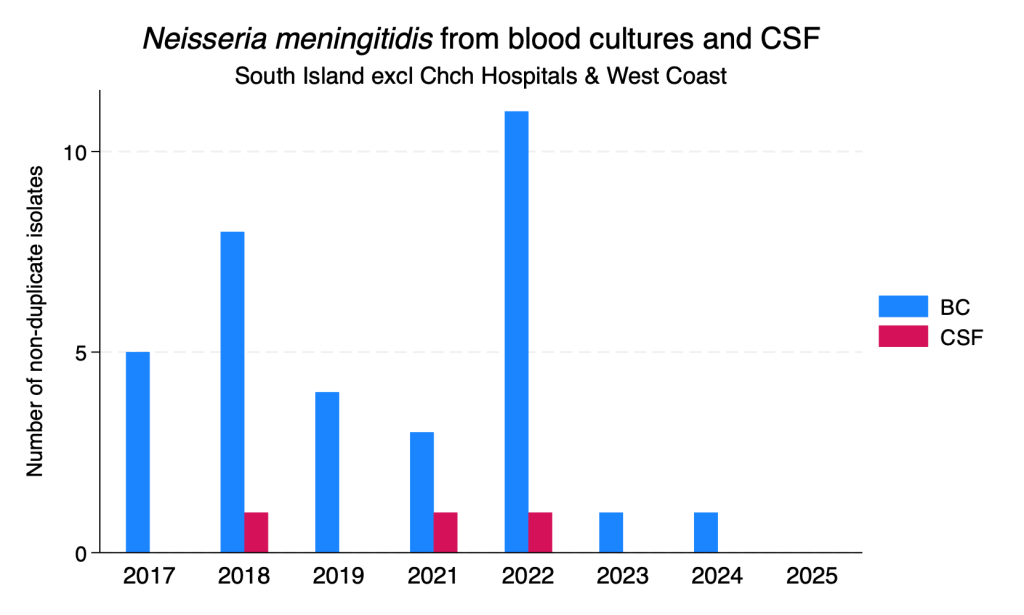
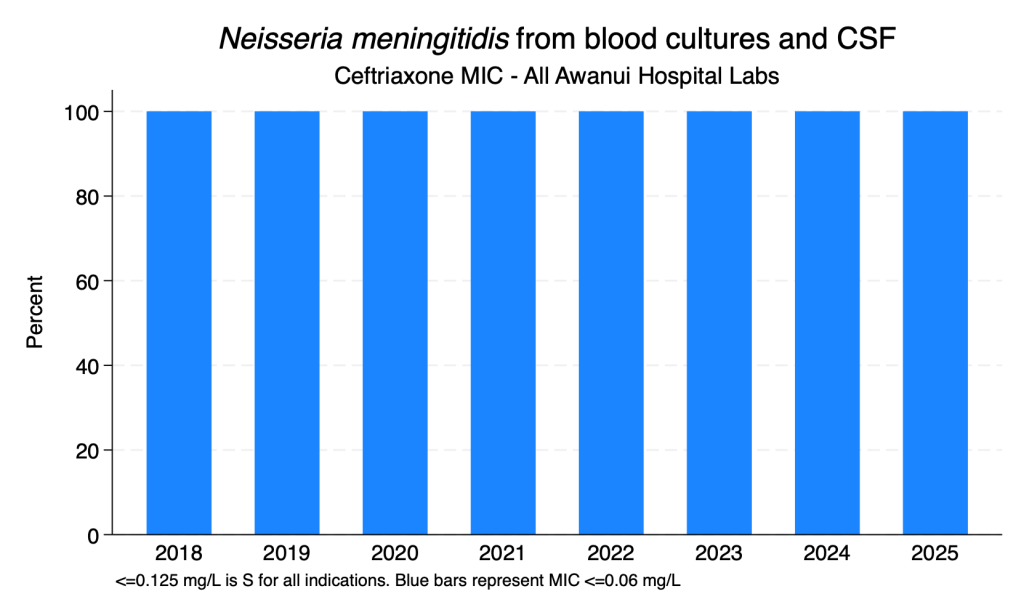
Neisseria meningitidis – bloodstream and CSF isolates
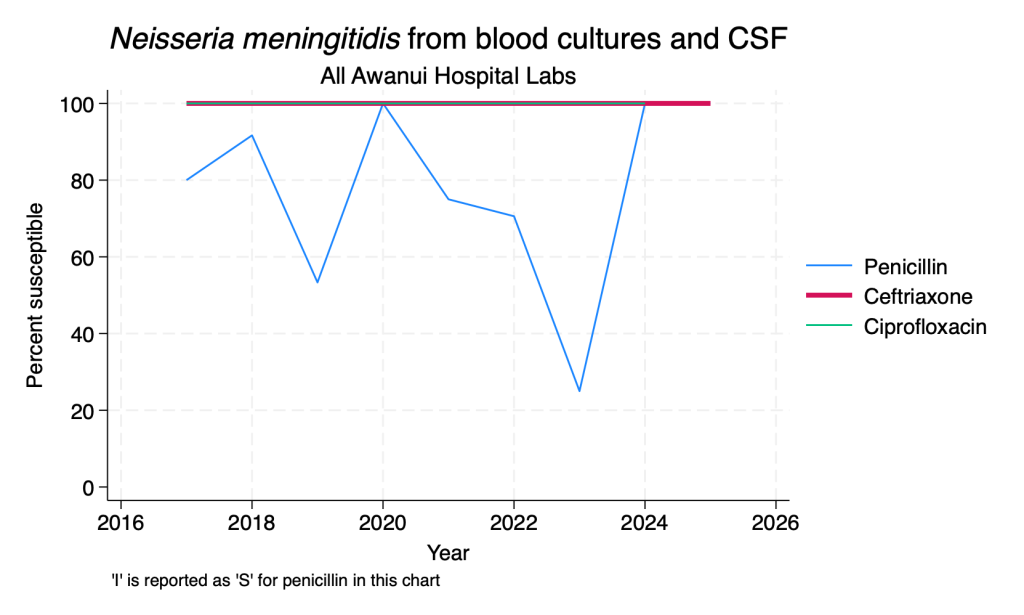
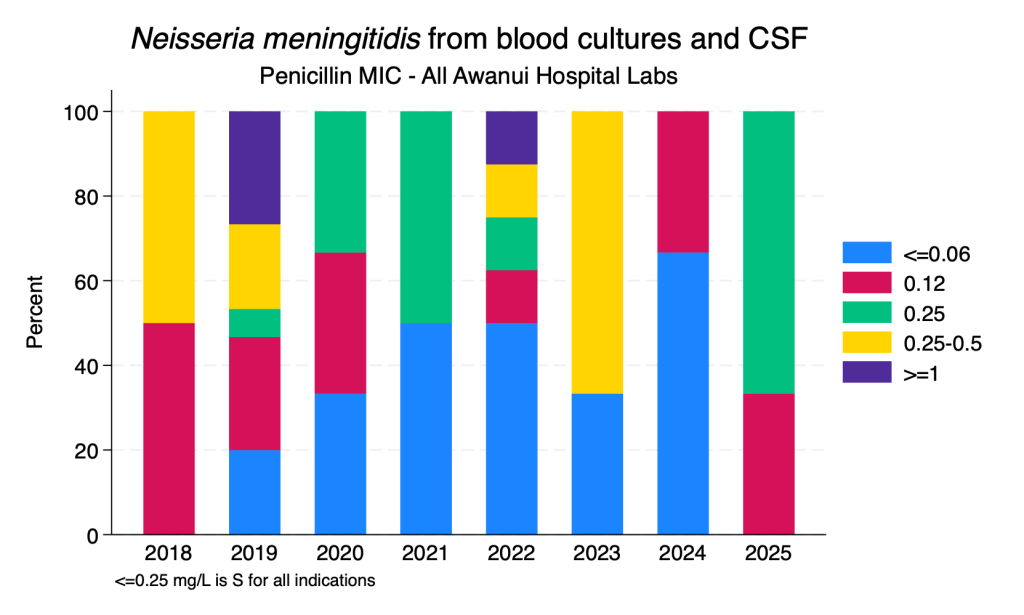
Data are derived from Awanui Labs that perform testing for public hospitals. N. meningitidis (meningococcus) is now a rare cause of invasive infection but is of interest due to its ability to cause severe disease. Duplicate isolates from the same person in the same year are removed. Due to lower numbers susceptibility is not subdivided according to location. Susceptibility testing was not performed on all isolates until 2023 onwards.
Commentary
- Ceftriaxone and ciprofloxacin resistance has not been seen and no increases in ceftriaxone MICs have been seen.
- Raised MICs and penicillin resistance is present and fluctuates over time.
Neisseria gonorrhoeae
Data are derived from all Awanui Labs. NAAT is the primary diagnostic method for gonorrhoea and culture is only performed on a subset of cases, which should be considered when interpreting susceptibility patterns. Duplicate isolates from the same person in the same year are removed. Ceftriaxone is the recommended treatment for gonorrhoea, and reductions in susceptibility have been seen internationally.
Commentary
- Ceftriaxone resistance has not been seen at Awanui labs, but there have been some isolates with small increases in MIC.
- Ciprofloxacin resistance is common, which is why culture and susceptibility testing is important for people that cannot be given ceftriaxone.
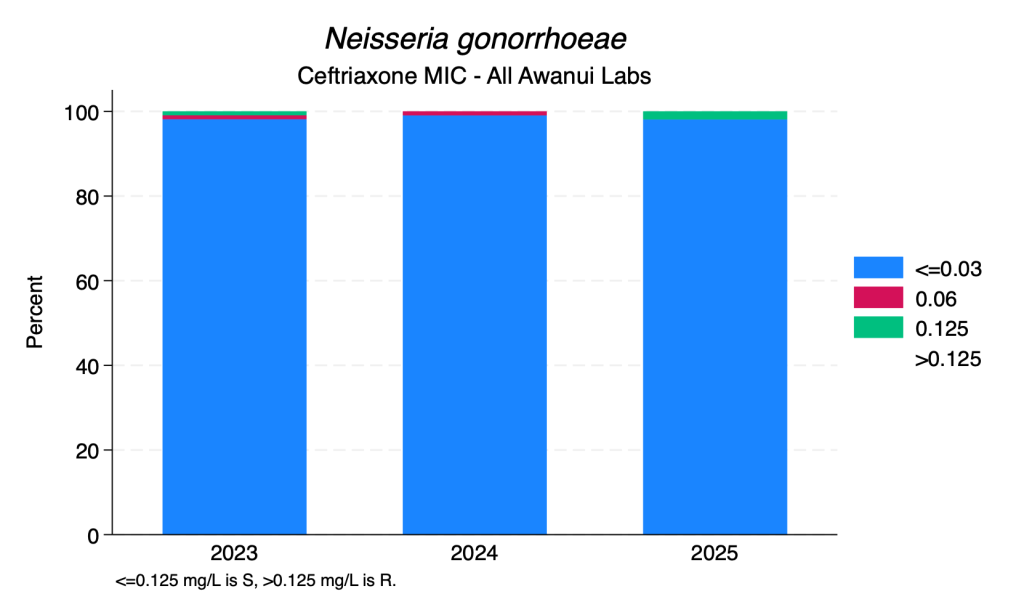
Number of isolates tested for ceftriaxone by year:
| 2023 | 2024 | 2025 |
| 109 | 214 | 213 |
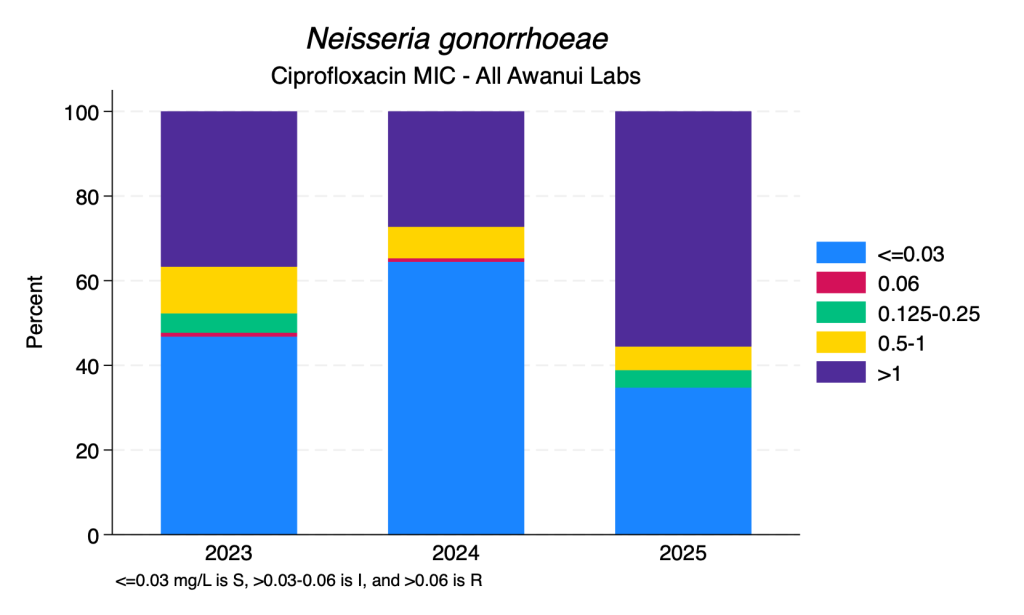
Number of isolates tested for ciprofloxacin by year:
| 2023 | 2024 | 2025 |
| 109 | 121 | 72 |
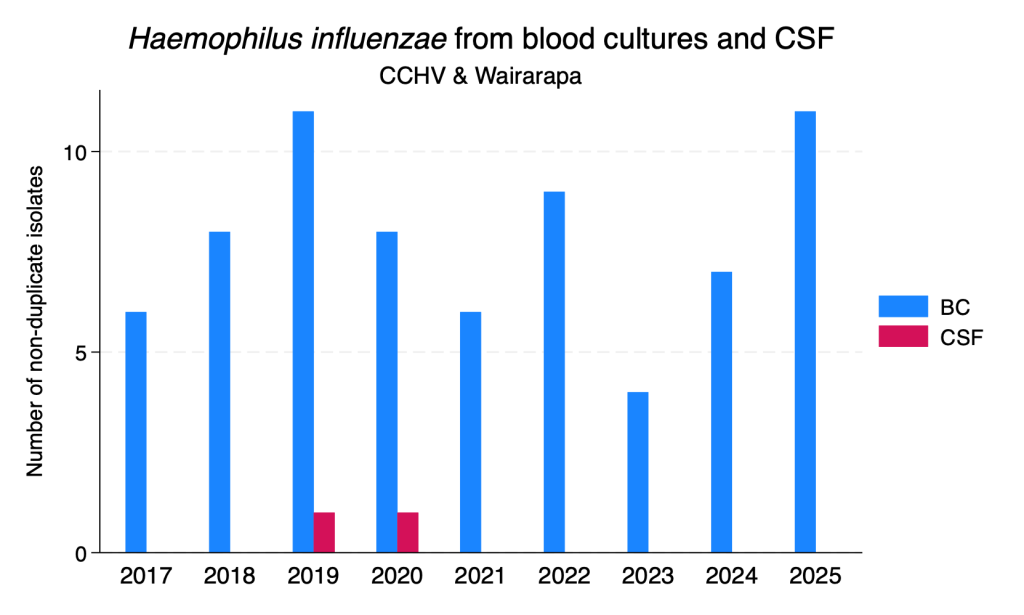
Haemophilus influenzae – bloodstream and CSF isolates
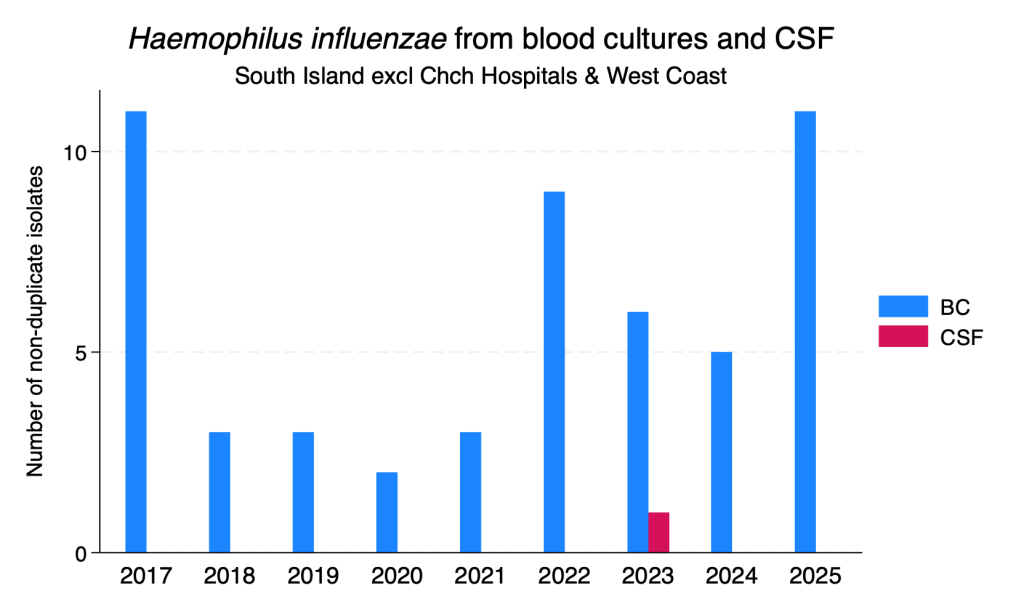
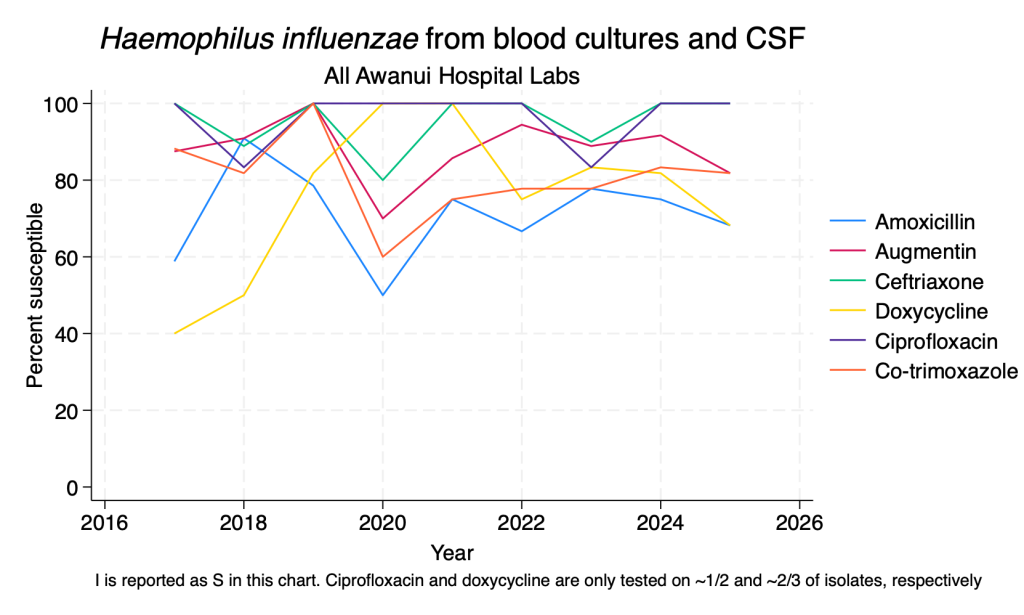
Data are derived from Awanui Labs that perform testing for public hospitals. H. influenzae is now a rare cause of invasive infection due to vaccination. Duplicate isolates from the same person in the same year are removed. Due to lower numbers susceptibility is not subdivided according to location, and considerable year-on-year variability is seen due to random variation.
Commentary
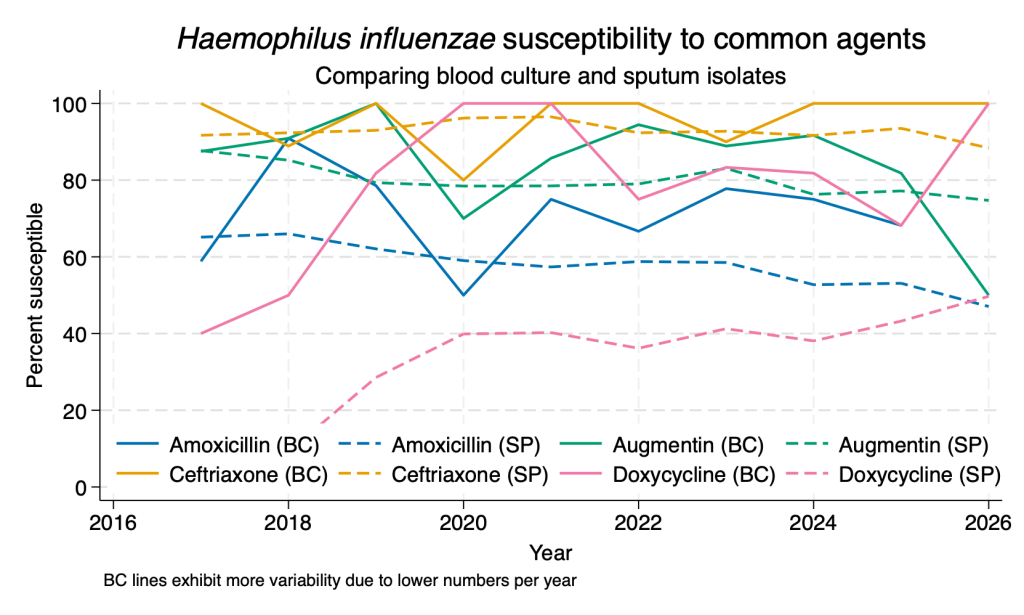
- Ceftriaxone resistance remains rare.
- Like S. pneumoniae resistance is far more common in sputum isolates, compared to invasive isolates, and sputum susceptibility patterns are probably a poor marker of important changes in susceptibility in this organism over time.
Antibiotic therapy
Recommended adult doses for ‘optimised’ antibiotic dosing
Note: many of these agents may require adjustment with significant renal impairment. Seek ID or pharmacy advice if necessary.
Oral agents:
- Amoxicillin – 1g tds
- Augmentin – use ‘boosted augmentin’ (Augmentin 625mg tds + amoxicillin 500mg tds)
- Ciprofloxacin – 750mg bd
- Co-trimoxazole – 1440mg bd or 960mg tds
IV agents:
- Amoxicillin – 1g q6h (standard dose sufficient for ‘I’ when given IV). If patient septic or >100kg use 2g q6h.
- Augmentin – 1.2g q8h (standard dose sufficient for ‘I’ when given IV). If patient septic or >100kg use ‘boosted IV augmentin’ (Augmentin 1.2g q8h + Amoxicillin 1g q8h)
- Benzylpenicillin 2.4g q6h
- Ceftazidime – 2g q8h
- Cefepime – 2g q8h
- Piperacillin-tazobactam (Tazocin) – 4.5g q6h
Topical treatment options for conjunctivitis
| Chloramphenicol | Fusidic Acid | Tobramycin | Ciprofloxacin | |
| Staph aureus | Susceptible | Susceptible | Susceptible | Susceptible |
| Haemophilus influenzae | Susceptible | Resistant | +/- | Susceptible |
| Strep pneumoniae | Susceptible | Resistant | Resistant | +/- |
| Moraxella catarrhalis | Susceptible | Resistant | Resistant | Susceptible |
| Corynebacterium macginleyi | Susceptible | Resistant | Resistant | Susceptible |
| Pseudomonas aeruginosa | Resistant | Resistant | Susceptible | Susceptible |
| Enterobacterales (e.g. E. coli, Klebsiella, Serratia) | Susceptible | Resistant | Susceptible | Susceptible |